

The Bassmaster Elite Qualifier at Lake Guntersville gives competitors a short, high-pressure test on one of tournament bass fishing’s most analyzed reservoirs. The 2026 Nitro Boats Bassmaster Elite Qualifier at Lake Guntersville presented by Bass Pro Shops was scheduled for November 11-13, 2026, according to the official Bassmaster event page. With competition still ahead as of November 3, 2026, the most useful preparation is not a prediction. It is a disciplined read of format, water temperature, bait movement, and the local pressures that make Guntersville different from a generic fall derby.
Bassmaster Elite Qualifier Format Pressure
Bassmaster Elite Qualifier Rules Change The Search
The research notes for this event identify a central constraint: forward-facing sonar is not allowed. That changes how an angler should prepare. It does not make electronics irrelevant. Mapping, side imaging, down imaging, depth history, contour lines, and regular sonar still matter. The difference is that anglers cannot build the event around watching individual fish respond in real time.
That pushes the contest toward older tournament skills: reading grass edges, timing bait movement, judging water color, repeating productive depth bands, and making decisions from bites rather than from constant visual confirmation. In Hall of Fame terms, that is closer to the pattern-fishing foundation that shaped modern bass tournaments before live imaging became common. Guntersville has long rewarded anglers who can identify a class of water, then run enough similar places to prove whether the pattern is stable.
The no-FFS condition should also influence practice. An angler who spends practice marking every visible fish without testing cast angles, retrieve lanes, and grass contact may leave with weak evidence. Better preparation comes from confirming where bites originate: inside grass edge, outside grass edge, hard spot within vegetation, creek-mouth flat, point, or transition line. That information travels from area to area better than a single waypoint.
Cuts Reward Repeatable Weight, Not One Big Bite
The research notes cite expectations from Bassmaster commentary that more than 20 pounds per day could be needed to reach the top tier, with 21 to 23 pounds a safer final-day range. Those figures should be treated as informed expectations rather than official results because the event had not been held as of November 3, 2026.
Still, that expectation shapes decision-making. A limit of solid keepers may settle nerves, but it may not satisfy the demands of this field if Guntersville produces the way experienced observers expect. Competitors should think in terms of upgrade routes before launch: where to catch a limit, where to hunt larger bites, and when to leave a productive but low-ceiling area.
Water Temperature And Fall Timing
Temperature Is A Planning Tool, Not A Script
The latest condition note in the research cited a Lake Guntersville surface temperature around 73.3 degrees on October 31, 2026, and the local live tracker provides daily context through the Guntersville water temperature page. That is a high starting point for anglers thinking about late-fall movement, and it calls for caution. Early November can change quickly, but competitors should not assume every fish has already settled into a cold-water pattern.
The research notes also describe early November on Guntersville as a transition period that can move toward the mid-50s to low-60s. If that slide occurs before competition, baitfish behavior may become more concentrated and bass may feed more aggressively around shad. If it does not occur as sharply, some fish may remain spread across grass flats, shallow cover, and intermediate staging areas.
For the Bassmaster Elite Qualifier, that means practice should cover multiple temperature-related options. A narrow plan built only around a cold-front assumption could miss fish still using warmer-water routes. A plan built only around shallow activity could miss staging fish if conditions shift before November 11.
Feeding Windows Deserve Time Management
The research notes point to stronger windows early in the morning and again late in the afternoon, with midday periods potentially slower. That does not mean every bite will follow the clock. It does mean tournament time should be managed with intent.
A practical plan is to start in areas where active fish can show themselves quickly, then use slower midday stretches to test depth changes, thicker grass, hard-bottom seams, or less pressured stretches. The late-day period should not be treated as leftover time. If an afternoon window opens, the angler who has protected enough fuel, confidence, and high-percentage water can turn an average bag into a competitive one.
Guntersville Patterns Without Forward-Facing Sonar
Shad Presence Should Drive Area Selection
The fall equation in the research notes is direct: shad movement is central. On Lake Guntersville, that often places attention on grass edges, flats, drops, points, and creek-mouth areas. The key is not simply seeing bait. It is seeing bait in water where bass can feed efficiently.
Without live sonar, anglers need to build a chain of evidence. Birds, surface flickers, scattered bait on traditional sonar, isolated grass clumps, and repeated short strikes can all matter. One clue alone can mislead. Several clues in the same area are stronger. That is how a competitor converts observation into a tournament pattern.
Reaction baits fit this setup because they cover water and help locate aggressive fish. The research notes list lipless crankbaits, jerkbaits, vibrating jigs, and larger swimbaits as relevant fall tools, with red, bright or chartreuse, and shad-style patterns among the reported choices. Those are not automatic answers. They are starting points for testing speed, depth, vibration, and water color.
- Use a lipless crankbait to check grass flats and trigger fish near vegetation.
- Use a vibrating jig where stained water or grass contact calls for stronger vibration.
- Use a jerkbait when bait is visible and fish are suspending or tracking above cover.
- Use a swimbait when the goal is a larger bite around shad-focused bass.
Grass Flats Still Need Separation
Guntersville grass can attract both fish and fishermen. That makes separation critical. A flat with bait is useful. A flat with bait, an edge, a depth change, and a hard spot is better. A flat that reloads during a known feeding window is better still.
Competitors preparing for the Bassmaster Elite Qualifier should avoid treating all grass as equal. The best tournament areas usually have a reason fish stop there. That reason may be a small ditch, a point in the grass line, a lane through vegetation, or a cleaner patch of bottom that concentrates feeding. Those details are easy to overlook when practice time is short.
A related preparation angle is pressure. Guntersville draws heavy local and tournament attention, so obvious community areas may still produce but may require better timing. Local fishing communities also feel the impact of large events through lodging, fuel, tackle, meals, and guide conversations; broader outdoor coverage across the regional network, including as seen through Texas Sportsmen, shows how tournament fishing often links water, towns, and small businesses beyond the weigh-in stage.
Culling, Weather, And Local Impact
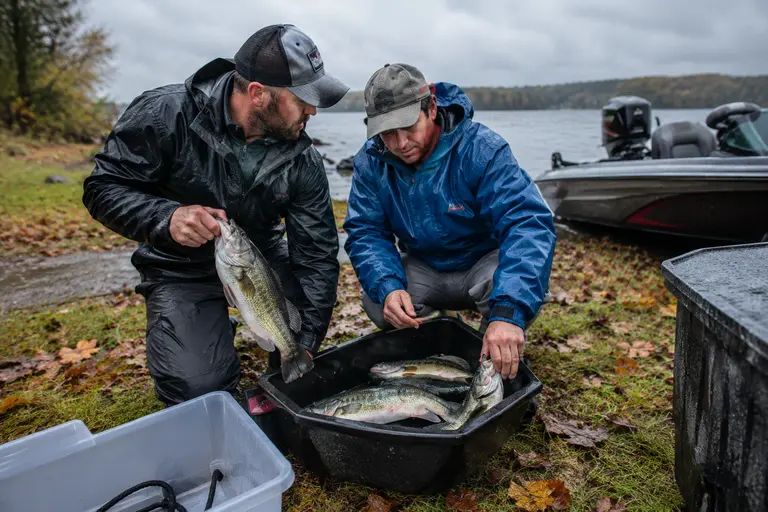
Aggressive Culling Requires A Realistic Baseline
The research notes point to tight weight spreads and the need to upgrade aggressively. On a fishery where 3- to 4-pound bass may not be enough to separate from the field, culling strategy starts before the first fish goes in the livewell. An angler needs a baseline for what counts as a useful keeper and what only delays the search for heavier fish.
That does not mean reckless running. It means setting decision rules. If a starting area gives up a quick limit but no sign of larger bass, the angler should know the next move. If a high-ceiling area produces only two bites, the angler must decide whether those bites justify more time. The best decisions usually come from pre-planned thresholds rather than emotion after a missed fish.
Weather And Clarity Can Rewrite A Practice Plan
The research notes describe changing weather, barometric movement, stained pockets after rain, and clarity differences around the lake. Those variables matter more under a no-FFS format because anglers are reading water and cover instead of watching individual targets. Stained water may call for more vibration, contrast, or slower presentations near cover. Clearer water may reward distance, natural bait profiles, and cleaner casts.
Lake level and visibility also affect how bass use grass and shallow structure. If water is lower than normal pool, as the research notes indicate, some shallow targets may lose depth while edges and drains may gain value. Because that detail can change, tournament preparation should include daily checks, not a one-time practice conclusion. For a related Guntersville planning angle, the site’s prior Guntersville preparation notes are useful where rules, practice timing, and cover-based planning overlap.
Bassmaster Elite Qualifier Takeaways For Guntersville
The cleanest preparation for the Bassmaster Elite Qualifier is to build a plan that can survive change. The tournament runs November 11-13, 2026, and the lake conditions described in the research point to transition rather than certainty. Water temperature, shad movement, grass condition, clarity, and fishing pressure all deserve daily review.
The no-forward-facing-sonar rule places more value on repeatable pattern work. Anglers who can connect bait to grass, grass to depth, depth to timing, and timing to upgrade bites should be better prepared than anglers who only collect isolated clues. Guntersville has enough quality bass to reward aggressive decisions, but the evidence still has to come from the water.
For competitors, the assignment is direct: use traditional tools well, protect the best feeding windows, test reaction baits against water color and grass contact, and keep a disciplined culling plan. That is not a guarantee of a check. It is the most supportable path from the available conditions toward a competitive three-day performance.