

Guntersville Bass Tips are easier to trust when they come from a finished event, not a rumor from the ramp. The 2026 Big Bass Tour Gerald Swindle Big Bass Classic at Lake Guntersville was held from October 9-11, 2026, and it gave local anglers, traveling competitors, tackle shops, and volunteer event workers a clear set of lessons. Josh Hughes won with a 7.82-pound largemouth caught during the first hour of Sunday, October 11, while Philip Morris finished second with 7.42 and Mark Chevrier was third with 7.41. That one-hundredth of a pound between second and third is not just trivia; it shows how narrow the scoring edge can be in a big-bass format.
Guntersville Bass Tips From The 2026 Classic
Guntersville Bass Tips Start With Timing
The official results matter because this was not a five-fish-limit event where an angler could build weight across a day. In a big-bass format, one bite can set the ceiling. According to the official Guntersville results, the event produced high-end fish after Saturday’s competition was canceled. The field still weighed 337 bass across Friday and Sunday, with an average of 4.49 pounds per fish. Sunday’s average rose to 4.82 pounds.
That pattern tells me the most useful lesson was not simply to fish harder. It was to protect the hours when better fish were catchable. Hughes’ winning fish came during the first hour of the final day. The research also noted local guidance that some strong areas may not show life until about 9 to 9:30 a.m. Those two details can sit side by side without conflict. Some fish bit early, while other productive areas may have needed time before they showed their value.
For me, the practical Guntersville Bass Tips from that timing split are simple: do not abandon a qualified area just because the first short stretch is quiet, but do not ignore the opening window either. In a community event with more than a thousand anglers, pressure builds fast. A good plan has to account for both early opportunity and delayed activity.
What The Margins Said
The top of the standings showed very little separation. Hughes’ 7.82-pound winner was four-tenths of a pound ahead of second. Second and third were separated by 0.01 pound. Five of the top fish were over 7 pounds, which supports the research point that Lake Guntersville continued to produce tournament-quality largemouth during this event.
That should shape how anglers read their own day on this lake. A four-pound fish was a strong bass in many local tournaments, but it was not enough to decide this particular Classic. With a 4.49-pound event average among weighed bass, competitors needed a realistic plan for a fish well above average. That means fishing places and presentations that can draw a larger bite, not just areas that produce frequent small keepers.
What The Results Said About Risk
Big Fields Change Decisions
The field included 1,119 anglers from 23 states. That scale affects more than the weigh-in line. It changes how water gets shared, how quickly community ramps and nearby businesses feel traffic, and how sponsors measure visibility. A tournament of that size can create meaningful weekend activity for fuel stops, tackle counters, lodging, restaurants, and local service crews, though the research did not provide a dollar figure for economic impact.
As an event organizer, I read that field size as a reminder that communication matters. Anglers need clear weigh-in procedures. Host communities need predictable traffic around access points. Local sponsors need placements that connect them with anglers without getting in the way of tournament operations. For community event organizers, keeping sponsor and service contacts in one place helps before a crowded tournament week, and a related network resource such as Efficient Directory can be useful for organizing contact information.
Saturday’s Cancellation Changed The Event Shape
Saturday’s competition was canceled, so the finished event was built on Friday and Sunday results rather than three full competition days. That matters for analysis. A canceled day reduces the number of official weigh-in chances and places more weight on each remaining bite window. It also limits what can be said about daily trends, because there is no Saturday data in the finished competition record.
That is where a cautious read helps. Sunday’s higher average of 4.82 pounds does not prove every pattern improved across the lake. It shows that the fish brought to the scales Sunday averaged heavier than the combined event average. Anglers studying the event should treat that as a tournament data point, not a full lake report.
Bite Windows And Water Choices
Shallow Water Stayed In The Conversation
The research tied the October Classic to earlier 2026 Major League Fishing coverage at Guntersville. That earlier Stage 1 reporting included shallow-water success, including big fish caught in water four feet deep or less by Jacob Walker with a fire-craw bladed jig. The October Big Bass Tour results did not prove the same bait or depth won the Classic, but the broader 2026 Guntersville record supports one conservative lesson: shallow water should not be dismissed just because conditions feel marginal.
On a grass lake, shallow cover can remain relevant if it sits near useful movement routes. That can include grass edges, river flats, creek-channel influence, points, and other places where bass can move between feeding water and nearby depth. The research named milfoil and hydrilla as vegetation types tied to productive habitat. The lesson for local anglers is to evaluate the edge, not just the depth number.
Waiting Has To Be Active
Waiting on a bite window does not mean sitting still without information. The better version is active patience. An angler can keep checking water clarity, grass condition, bait presence, boat traffic, and casting angles while staying committed to an area that has the right ingredients. That kind of discipline is different from fishing memories.
For anglers building practice routines before a Guntersville event, a useful companion read is this site’s Guntersville preparation piece, especially because preparation at a crowded lake has to include timing, rules, cover, and how much water can realistically be checked before competition.
Baits, Habitat, And Electronics
Bait Choice Followed Forage Clues
The research pointed to bait and color choices tied to forage, including black and blue or green pumpkin depending on visibility and whether bass were feeding around bream or shad. Major League Fishing’s prior Guntersville bait coverage also showed that top anglers used more than one presentation style to catch tournament fish at the lake, as detailed in its Guntersville bait review.
That supports a grounded bait lesson. Color and profile should answer a question from the water. If visibility is low, a darker or more visible profile may make sense. If bass are using grass and feeding around bluegill, a compact bait that can work through cover may fit. If shad are the key forage, moving baits that imitate that shape may deserve time. The event record did not identify every top finisher’s bait, so any exact bait claim beyond the verified notes would go too far.
Electronics Were A Tool, Not The Whole Plan
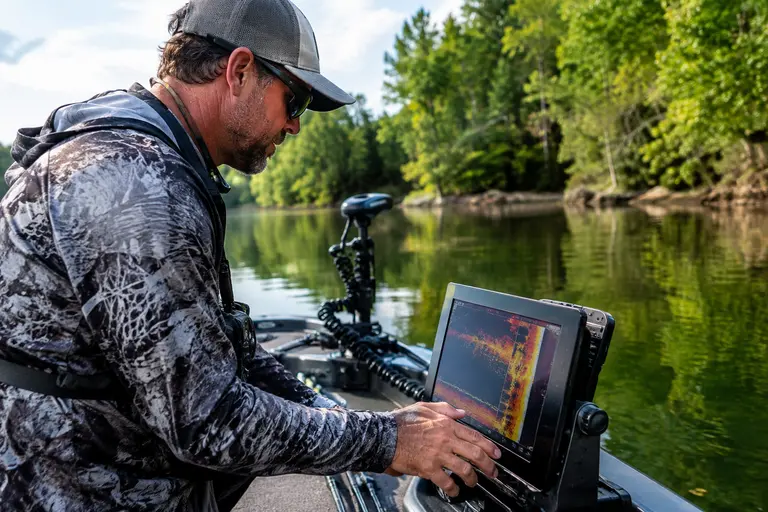
The research also referenced forward-facing sonar from earlier 2026 Guntersville competition, including a reported share of scorable bass and weight tied to sonar use during that event. For the October Big Bass Tour, the safer takeaway is that electronics can help an angler make decisions, but the winning record provided here does not show that one screen-based approach controlled the Classic.
That matters for weekend anglers and local tournament fishermen. A graph can help find bait, depth changes, suspended fish, and edges. It cannot replace decisions about where a big fish is likely to feed during a short tournament window. On Guntersville, the best read still blends electronics with grass, channels, flats, points, water clarity, and pressure.
Guntersville Bass Tips For Community Anglers
What Local Clubs Can Use
Community clubs can use this event as a scoring lesson. Big-bass formats reward patience, but they also punish wasted time. If a club hosts a similar format, anglers should understand that one above-average fish can beat a steady day of smaller bass. Directors should also expect more questions around hourly weigh-ins, fish care, parking, and traffic flow when participation is high.
Sponsors can read the same results a different way. A 1,119-angler field from 23 states gives local businesses direct contact with serious bass fishermen, but sponsor value depends on clear placement and event fit. A tackle brand, marina, guide service, restaurant, lodging partner, or fuel stop all connect to the angler’s weekend in different ways. The strongest sponsor plan is the one that helps competitors without crowding the tournament process.
The final Guntersville Bass Tips from the October 9-11, 2026 Classic are not flashy. Respect the first-hour bite. Stay long enough for delayed windows in qualified water. Fish for above-average bass, not just bites. Match baits to forage and visibility. Treat electronics as support for a habitat plan. Most of all, read the finished results with care. Lake Guntersville gave the field quality fish, but the event also showed how small the margins were once those fish reached the scales.