

The safest way to talk about Grand Lake conservation around the Grand Lake Regionals is to stay with what the public record supports. The research supplied here does not verify a specific tournament date, sanctioning body, field size, weigh-in results, or on-site conservation programming for the Regionals. That limits any event recap. It does not limit the conservation discussion, because Grand Lake O’ the Cherokees has documented watershed, water-quality, and habitat issues that matter directly to tournament anglers, local hosts, sponsors, and families who use the fishery.
As an angler and event organizer, I look at this through a practical lens. A regional tournament can bring traffic to ramps, restaurants, lodging, tackle shops, and volunteer groups. It can also put public attention on the same resource that makes the event possible. That means conservation messaging should not be treated as a side note. It should be built around verified conditions in the basin and the work already being done by public agencies.
That also helps keep sponsor claims honest. A business can support a derby, donate to youth fishing, or back habitat education without claiming results that have not been measured. The best community impact work is specific: what water body, what need, what agency program, what angler behavior, and what follow-up.
Why Grand Lake Conservation Belongs At Regionals
Grand Lake Conservation Starts With The Basin
Grand Lake is not just a shoreline venue with boat docks and weigh-in photos. The Grand Lake Watershed-Based Plan, published by the Oklahoma Conservation Commission in May 2017, describes the Grand Lake basin as reaching parts of Arkansas, Kansas, Missouri, and Oklahoma and covering about 10,298 square miles. The same plan states that the lake holds about 1,672,000 acre-feet of water and has been affected by nutrient enrichment, sedimentation, and metal contamination in tributaries Grand Lake Watershed-Based Plan.
That scale matters for tournament planning. A weigh-in may happen in one town, but the fishery is influenced by land and water decisions across a much larger drainage. Runoff, bank erosion, tributary conditions, and dissolved oxygen concerns are not abstract agency language. They shape habitat quality, fish stress, water clarity, spawning success, and the public’s confidence in the lake.
For Regionals organizers, that creates a clear communication lane. Instead of broad slogans, tournament staff can explain that the event depends on a four-state basin. That makes local stewardship more understandable. Every ramp cleanup, fish-care briefing, and youth education booth fits into a broader watershed story.
Event Messaging Should Match Verified Conditions
The same watershed plan identifies some lake segments and tributaries as impaired under Clean Water Act Section 303(d), with listed issues that include excess nutrients, sedimentation, low dissolved oxygen, lead, cadmium, and zinc. It also notes a fish flesh advisory for upper-reach waters because of elevated lead levels.
Those details should be handled carefully at a public event. They are not reasons to dramatize the lake or discourage lawful fishing. They are reasons to be precise. If a tournament platform mentions impairment, it should point to the plan and explain what the designation means. If fish consumption advisories are discussed, they should be framed as public-health guidance, not as tournament rumor.
That is where anglers can help. We already talk in specifics on the water: depth, cover, current, temperature, and fish condition. Conservation talk deserves the same discipline.
The Watershed Facts That Shape Event Planning
Water Quality Is A Tournament Issue
Competitive fishing often gets judged by the final bag or winning pattern, but water quality sits underneath every result. Nutrient enrichment can affect aquatic plant growth and oxygen conditions. Sedimentation can reduce habitat quality and alter spawning areas. Metal contamination in tributaries brings a separate public-resource concern. The verified research does not connect those conditions to any specific Grand Lake Regionals outcome, so it would be wrong to claim they changed a bite, a winning area, or an angler’s strategy.
What can be said is more grounded: documented watershed conditions should influence how events present themselves to the local community. Fish care stations, livewell checks, quick-release planning, and public education displays all carry more weight on a water body with recorded water-quality pressures.
That point connects with broader tournament practice. We have seen that local conservation starts when anglers, hosts, and sponsors connect event operations to the water body’s documented needs. Grand Lake gives organizers a strong case for that kind of planning because the basin is large, multi-state, and already the subject of formal watershed work.
Community Partners Need A Common Script
Local businesses often want to support fishing events because they see direct community value. Hotels fill rooms. Marinas sell fuel. Restaurants get teams and families. Tackle shops see traffic before practice and after weigh-in. That value is real, but a conservation message should avoid unsupported economic claims unless event organizers have receipts or a post-event report.
A better approach is to give partners a common script. For example, a sponsor can say it supports clean ramps, careful fish handling, and watershed education tied to Grand Lake’s documented needs. A marina can remind anglers to dispose of line, trash, and bait containers properly. A youth group can help distribute basic watershed materials. None of that requires invented numbers.
Regional recreation networks also matter because anglers are often part of wider outdoor communities. A related site in the same network, Copeland Hills Golf, serves as a reminder that maintaining local recreation areas depends on both land and water stewardship.
Habitat Work Anglers Can Explain Clearly
Guard The Grand Gives The Public A Plain Entry Point
One of the strongest public-facing pieces in the research is GRDA’s Guard the Grand program. GRDA describes it as an educational initiative aimed at building a watershed stewardship ethic among residents whose land drains into Grand Lake. The same GRDA page also describes broader ecosystems and watershed management work, including the Rush For Brush program, which has been run by the Ecosystems Management Department since spring 2007 GRDA watershed work.
That matters because education is often the easiest conservation doorway at a tournament. Not every spectator owns shoreline. Not every young angler understands nutrient loading or tributary impairment. But most people can understand that what happens uphill and upstream affects the lake where fish are caught.
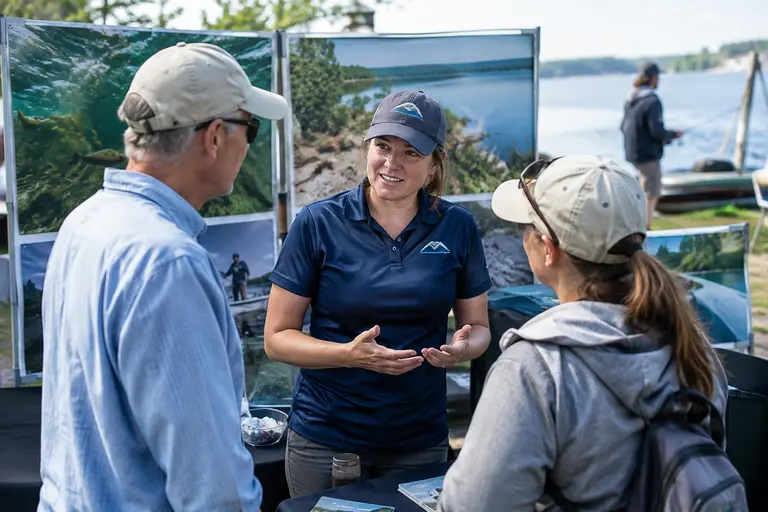
For event organizers, Guard the Grand-style messaging can fit naturally into registration packets, weigh-in announcements, youth casting activities, and sponsor tables. The key is to name the program accurately and avoid overstating what a single event can accomplish.
Brush And Cover Are Easy To See
The Rush For Brush program is especially useful for anglers because cover is a language fishermen already speak. GRDA states that the program installs simulated brush piles, both natural and artificial, to provide cover and protection for fry and fingerlings. GRDA also states that those structures are more resilient than natural brush piles.
That is a clear habitat story. Young fish need places to avoid predators and grow. Anglers understand that cover concentrates life. Tournament crowds understand that better habitat supports better fishing opportunity over time, even if no single habitat project guarantees a specific catch rate.
In a Regionals setting, this is where conservation can feel local instead of distant. A child at a weigh-in may not remember a technical term from a watershed plan. That same child may remember that small fish use brush-like cover the way people use shelter. That is the kind of message that lasts beyond the awards stage.
Sponsor Value Should Be Tied To Measurable Stewardship
Avoid Claims That The Record Does Not Support
Sponsorship around conservation should be useful, but it has to be careful. A logo on a banner does not, by itself, prove improved water quality. A donation does not, by itself, prove more fish. A tournament does not, by itself, repair sedimentation, nutrient enrichment, or metal contamination concerns across a 10,298-square-mile basin.
That does not make sponsorship shallow. It means the best sponsor value comes from actions that can be documented. Did volunteers remove trash from a ramp? Did organizers provide fish-care instructions? Did the event distribute agency-approved watershed materials? Did sponsors fund supplies for an education table? Did the tournament direct people to official guidance instead of hearsay?
Those are credible claims because they can be checked. They also help keep Grand Lake conservation from becoming a vague phrase on a backdrop. The work becomes visible, repeatable, and easier for the next event to improve.
Angler Conduct Is Part Of The Public Record
Anglers are often the most visible users of a fishery during a regional tournament. That public visibility cuts both ways. Good conduct can build trust with residents. Poor conduct can make every future permit or sponsor conversation harder.
The basic standards are not complicated: manage livewells, limit air exposure, respect posted rules, keep ramps moving, clean up line and plastics, and follow fish-consumption guidance where advisories apply. Those actions will not solve every watershed issue. They do show that competitive anglers understand they are borrowing a public resource for a public event.
That is the community side of conservation. It is not only about agencies and plans. It is about whether the people who benefit from the fishery act like partners.
Grand Lake Conservation During The Regionals
Grand Lake conservation deserves a central place in any responsible discussion of the Grand Lake Regionals, but the event record provided here is too thin for a results-based recap. There is no verified date, no official tournament report, and no documented list of conservation activities tied directly to the Regionals in the supplied research.
What is verified is enough to guide an honest event analysis. Grand Lake sits inside a large multi-state basin. The watershed plan documents nutrient, sediment, dissolved oxygen, and metal-related concerns in parts of the system. GRDA has public education work through Guard the Grand and fish-habitat work through Rush For Brush. Those are the facts that should shape how organizers, sponsors, anglers, and local volunteers talk about the fishery.
The strongest regional events do more than crown winners. They leave the host community with a clearer understanding of the water, the fish, and the shared responsibility behind both. On Grand Lake, that means tying tournament pride to verified watershed needs and practical habitat education. That is how Grand Lake conservation becomes part of the event’s value instead of a line added after the weigh-in.