

Fall fishing techniques become more than lure selection once daylight shortens, surface temperatures fall, and fish use the water column differently. For club competitors, weekend anglers, and shoreline fishermen, autumn is not one single pattern. It is a sequence of changes that can move fish from summer holding areas toward bait, remaining cover, rock, and more accessible depths.
The best-supported fall adjustments begin with fish behavior, not brand names or personal hunches. Massachusetts fisheries officials describe autumn as a period when cooling water and changing light affect feeding, movement, and oxygen availability for fish, including bass, pike, and pickerel Mass.gov fall fish behavior. The U.S. Fish and Wildlife Service also frames fall as a productive period because many fish feed heavily before winter FWS fall fishing notes. Those two points matter to tournament fishing because they shift the value of practice: the pattern found on one warm afternoon may need re-checking after a front, a turnover event, or a bait move.
Why Fall Fishing Techniques Change Underwater
Fall Fishing Techniques Start With Forage
Autumn feeding is tied closely to payoff. The research points to a seasonal move toward larger prey for species such as bass, northern pike, and pickerel. That does not mean every cast should be made with the largest lure in the box. It means lure size should be judged against local forage and fish response. A reservoir with young shad, a natural lake with perch, and a pond with crayfish can all require different decisions.
For tournament anglers, fall fishing techniques cannot be separated from the bait they see in practice. If fish are pushing bait shallow, a moving bait may cover water efficiently. If fish are grouped near a drop-off or wood, a slower presentation may be the better competitive choice. The central question is not whether the calendar says October or November. It is whether the fish are using bait, cover, depth, and temperature in a repeatable way.
Turnover Changes Access To The Water Column
Fall turnover is one of the major reasons autumn fishing can feel unstable. As surface water cools and mixes with deeper water, fish that spent more time in deeper summer water can become available in shallower areas or nearer the surface. The research notes describe this as an opening of the water column rather than a simple shallow-water migration.
That distinction is useful in tournament terms. A competitor who only runs banks may miss fish suspended off structure. An angler who only watches deep water may overlook fish using rock, remaining weeds, or wood after the lake mixes. A cautious approach is to test several levels of the water column before deciding that fish have stopped feeding.
Reading Cover, Depth, And Oxygen
Remaining Cover Becomes A Higher-Value Target
As vegetation dies back, the best cover can become more isolated. Remaining weed edges, wood, rock points, drop-offs, and transition zones may concentrate bait and predators because they offer ambush points and more favorable conditions. This is where tournament history and local fishing culture meet practical biology: many fall events are won by anglers who do not fish every good-looking bank, but instead identify the few remaining places that combine bait, cover, and depth.
There is also a community impact in this pattern. On smaller lakes used by local clubs, a narrow set of productive fall areas can increase pressure. That makes fish care, efficient boat positioning, and respect for bank anglers more than etiquette. They are part of how a local fall event avoids turning a limited number of productive zones into a conflict point.
Rocks Matter For Bank Anglers
For shoreline anglers, rocky banks and riprap deserve special attention in fall because rocks can retain heat longer than surrounding water. That slight warming can attract baitfish, and predators may follow. The key is to fish the rock as structure, not scenery. Angles along the edge, casts parallel to the bank, and pauses near transitions can be more useful than simply throwing straight out from shore.
This is one reason fall can be a strong season for bank-based community fishing. Anglers without boats may still reach productive water if public access includes riprap, causeways, rocky points, or dam faces. The research does not support a guarantee that every rock bank will hold fish, but it does support treating heat-holding structure as a logical starting point.
Presentation Choices For Cooler Water
Slow Down Before Downsizing
Cooler water generally calls for more controlled presentations. Slower retrieves, pauses, and finesse tactics can help when fish are deeper or less willing to chase. That does not require an immediate shift to tiny baits. In fall, fish may still target larger prey because the energy return is better. The better adjustment is often cadence first, size second.
A jerkbait pause, a jig held longer near wood, a swimbait counted down beside a break, or a soft plastic worked more slowly through an edge can all test the same principle. The lure has to stay in the strike zone long enough for fish that are feeding selectively. For anglers comparing seasonal decision-making, the same weather-first logic appears in this related discussion of fall bass weather patterns.
Match Forage Without Chasing Every Color
The research notes identify local forage size and natural seasonal color as useful guides, including shad, craw, and bone-style tones. That is a practical starting point, not a rule that removes judgment. In clear water, natural colors may help. In stained water, profile, vibration, and contrast may matter more than fine color differences.
The tournament lesson is restraint. Changing lures every few casts can hide the real pattern. It is usually more useful to test location, depth, retrieve speed, and casting angle before declaring that color is the problem. If two anglers in the same boat are testing, one can vary profile while the other varies speed. That creates cleaner information than random lure rotation.
Tournament Lessons For Local Fall Fisheries
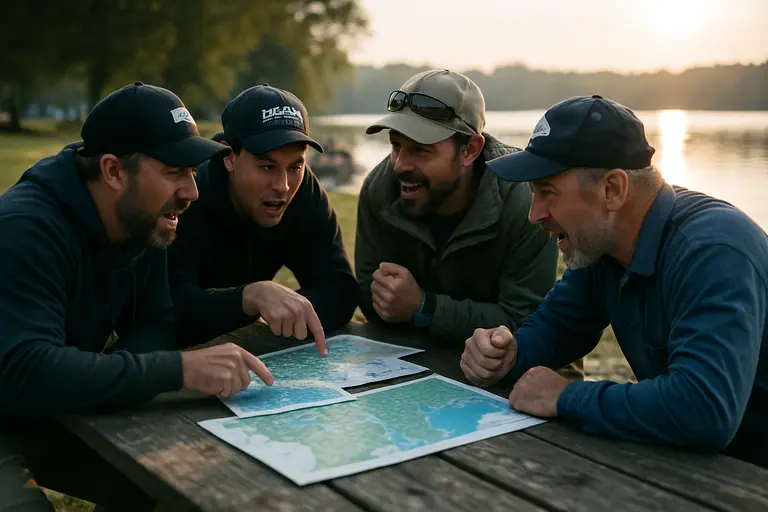
Daylong Activity Changes Tournament Timing
In summer, many anglers build their plans around early and late feeding windows. The fall research suggests that cooler, more stable temperatures and improved oxygen can spread activity across broader parts of the day. Early morning and late afternoon can still produce, but mid-day should not be dismissed automatically during mid-fall.
For tournament directors and club anglers, this changes how a one-day event is read. A slow first hour may not mean the lake is off. It may mean the better window is tied to slight warming, wind contact, bait movement, or a specific stretch of rock or weeds. Anglers who preserve time for a second pass through high-confidence water may gain better information than those who burn fuel chasing unrelated spots.
Warmwater And Coldwater Species Need Separate Plans
The research notes also point to differences among species. Trout and lake trout can become less restricted to deep cold refuges after turnover, while warmwater species may spread across more of the lake as oxygen and temperature conditions change. In northern states with historically cool or coldwater fisheries, the research notes indicate that warming lake temperatures and shorter ice seasons have been linked with warmwater species making up a larger share of catch, while large, deep lakes can still provide coldwater refuge.
That matters for multi-species anglers and fall events that share public water with trout fishermen, bass boats, and bank anglers. A bass pattern should not be assumed to explain trout movement, and a trout depth range should not be applied to bass without evidence from the water being fished.
Fall Fishing Techniques In Community Tournaments
Good fall fishing techniques come from reading conditions in sequence: forage first, then oxygen and turnover, then cover, depth, and speed. That order keeps the angler from treating autumn as a single shortcut. A club competitor may find bass on remaining weeds before turnover, on rock during a warming trend, or near deeper breaks after a front. Each result is valid only if it can be repeated under the conditions present that day.
For local fishing communities, that kind of evidence-based adjustment has value beyond the weigh-in. It helps bank anglers understand why riprap can matter, helps boaters avoid crowding every shallow flat, and gives tournament anglers a clearer way to explain their decisions without exaggerating the pattern. Readers interested in broader insights on this topic can stay informed by exploring related discussions at AP Levante, a related site in the same network.
Autumn rewards anglers who keep testing what the lake is showing. Cooling water, shorter daylight, changing oxygen, dying vegetation, and shifting bait all affect where fish hold and how they feed. The strongest tournament lesson is simple but demanding: do not fish memories of summer. Fish the fall conditions in front of you.