

Fishing closures became a practical conservation tool in Yellowstone National Park during the summer of 2026, not an abstract policy debate. For anglers, tournament organizers, guides, tackle shops, and volunteer groups, the dates matter because they show how quickly heat and low flows can shift a fishery from open access to restricted use.
Fishing Closures Set The Conservation Baseline
Why Fishing Closures Used A Temperature Trigger
Yellowstone’s July 2026 actions were tied to documented river conditions. On July 15, 2026, the park imposed full closures on the Firehole River, Madison River, and portions of the Gibbon River and their tributaries. The reason was direct: daytime water temperatures exceeded 68 degrees Fahrenheit, or 20 degrees Celsius, while flows were significantly below long-term averages. The National Park Service described those conditions as lethal to trout in its July fishing restriction update.
That threshold gives local fishing groups something concrete to work with. Anglers may disagree about tactics, locations, or acceptable pressure, but a posted temperature trigger creates a clear line for public communication. As an event organizer, I read that as one of the most useful parts of the Yellowstone example: the agency did not ask people to guess whether the river was stressed. It tied restrictions to temperature and flow conditions that could be explained in plain language.
The Access Change Was Not One Single Step
The restrictions also changed over time. On July 29, 2026, Yellowstone added temporary daily closures from 2 p.m. to sunrise on all park rivers and streams because high water temperatures and low stream flows persisted. Most of those daily restrictions were lifted on August 12, but full closures remained for certain waters that were still under heat stress.
That sequence matters for clubs and tournament committees. Heat policies are often judged as if they are all-or-nothing decisions. Yellowstone’s approach showed a more specific pattern: full closures where risk was highest, daily afternoon and overnight limits when heat stress spread across more waters, and partial reopening when conditions improved. For local fisheries, that kind of step-down structure can help preserve angler trust because access returns when the stated biological conditions improve.
What Changed After September 4, 2026
The Reopening Still Carried A Warning
On September 4, 2026, Yellowstone lifted the final full closures on the Firehole, Madison, and Gibbon rivers after water temperatures fell and flows improved. Fishing was allowed from sunrise to sunset, while the park stated that partial daily restrictions from 2 p.m. to sunrise could be used again if conditions deteriorated, according to the National Park Service’s September 4 update.
That reopening should not be read as a reset to normal summer assumptions. It was a condition-based reopening. The message for fishing communities is that conservation work does not end when a sign comes down. It shifts into monitoring, communication, and angler behavior. If the same river can move from full closure to sunrise-to-sunset access in a matter of weeks, then local clubs need procedures that can move just as quickly.
Event Planning Depends On Clear Cutoffs
For local tournament directors, fishing closures are more than a schedule inconvenience. They affect launch windows, weigh-in timing, fish-care staffing, sponsor signage, volunteer assignments, and the basic question of whether a competition should proceed on a given water. The Yellowstone record does not provide a bass tournament template, and it should not be stretched into one. Still, it does show why heat policies should be written before an event begins, not debated at the ramp.
A responsible event plan can identify who checks official notices, when decisions are announced, and how sponsors are informed if access changes. That protects the fishery and the event’s credibility. In a small fishing town, a poorly handled heat decision can affect more than the leaderboard. It can put pressure on guides, lodging partners, youth programs, conservation volunteers, and businesses that supported the event in good faith.
Community Conservation Duties During Heat Stress
The Local Message Has To Be Simple
During heat and low-flow periods, conservation communication has to be short enough for a boat ramp conversation. The Yellowstone dates provide a clean example: full closures began on specific waters on July 15, daily closures expanded across park rivers and streams on July 29, most daily closures ended on August 12, and the final full closures ended on September 4. That timeline is easy for anglers to repeat because it is built on dates and conditions rather than slogans.
Community discussion around fishing closures should stay anchored to those facts. The strongest local messaging avoids blame and focuses on fish survival, legal access, and shared responsibility. That matters for sponsors as well. A sponsor that supports a summer derby, youth clinic, or conservation fundraiser should not be left defending unclear decisions. Sponsors can help circulate official notices, but they need accurate language from organizers and agencies first.
Sponsor Support Should Match The Conservation Need
Sponsor strategy in this setting should be practical. Instead of centering every commitment on weigh-in banners or prize tables, local partners can support water-temperature education, fish-care supplies, volunteer communication, and rescheduling costs when restrictions force a change. That is not a claim that every closure requires the same response. It is a planning principle drawn from what Yellowstone’s staged restrictions made clear: access can change quickly when fish are under thermal stress.
For readers comparing outdoor event communication across related recreation communities, FS Golf is part of the same network, illustrating how different sports under the same umbrella can tackle unique environmental challenges effectively. This lesson in fishing demonstrates that conservation planning must be tied to the water, the fish, and the official rule in effect on a stated date.
How Local Clubs Can Build A Heat Policy
Use Official Notices Before Local Opinion
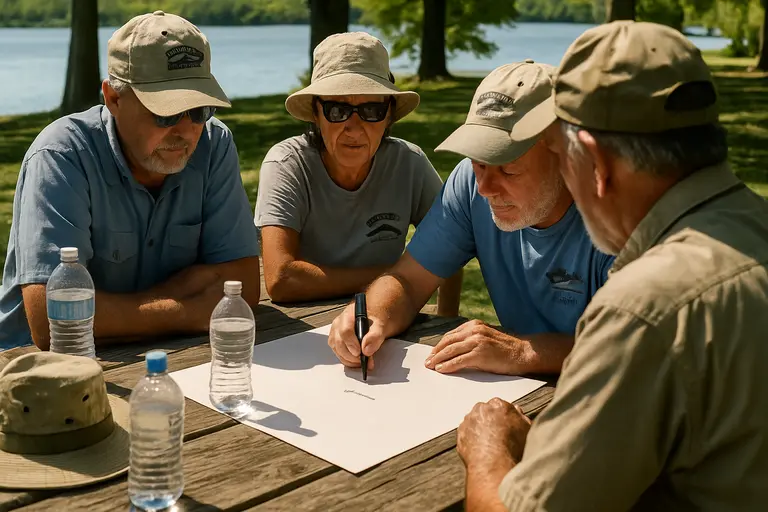
A club heat policy should begin with official restrictions. If a public agency has closed water, reduced hours, or warned that restrictions may return, a tournament committee should treat that notice as the operating floor. Local judgment can be more conservative, but it should not be less protective than the rule that governs the water.
The most useful policy is not complicated. It assigns responsibility, sets communication timing, and explains what happens to entry fees, points, sponsor obligations, and volunteer shifts if an event changes. On the conservation side, it should identify whether the event will shorten hours, move locations, postpone, or cancel if posted conditions cross a stated threshold. Our related coverage of conservation planning under heat closures follows the same core issue: access decisions shape both fish care and community trust.
- Confirm the active agency notice before announcing any fishing activity.
- Use explicit dates and times in club messages, not vague seasonal language.
- Tell sponsors how a closure changes their role before event day.
- Keep youth and charity events flexible when heat stress is documented.
Angler Conduct Still Counts After Reopening
Reopening does not remove the need for restraint. Yellowstone’s September 4 decision allowed sunrise-to-sunset fishing after conditions improved, while still warning that partial daily limits could return. That combination is the lesson. Access can resume, but fish care remains part of the agreement between anglers and the resource.
In a tournament setting, that means organizers should keep fish handling, livewell checks, and weigh-in speed on the agenda even after restrictions ease. In a recreational setting, it means anglers should keep checking official updates rather than relying on last week’s access report. The conservation value comes from matching behavior to conditions, not just obeying the first posted sign.
Fishing Closures As Local Conservation Work
The Yellowstone timeline gives fishing communities a grounded case study in how heat and low flows can move management from targeted river closures to parkwide daily limits and then back toward reopened access. The facts are narrow, but the lesson is useful. Conservation works best when rules are condition-based, dates are clear, and local partners repeat the same verified message.
For anglers and event organizers, the practical response is to prepare before the thermometer forces the issue. Written heat policies, sponsor communication plans, and respect for official closures help protect trout during the hardest part of summer. They also protect the local fishing community from confusion when access changes quickly. That is the kind of conservation work people at the ramp can understand, support, and carry into the next event.