

Ever wonder why some anglers win big while others just share tales? The secret lies in their prep work before fishing.
Real prep isn’t just random casting. It’s like a spy mission, gathering intel. I study past results, YouTube videos, and map out likely spots.
This isn’t for beginners. It’s how pros turn “maybe next time” into payday. While others sip coffee, the pro already knows where the big fish are.
That’s the power of proper lake reconnaissance. It makes all the difference in the competitive world of fishing.
Scouting the Lake
Think of lake scouting as geopolitical analysis for fish. You’re mapping territories before the actual negotiation begins. It’s where strategy separates the professionals from the weekend warriors clutching their lucky hats.
My practice routine starts with “historical intelligence gathering.” I target those magical 3-4 mile stretches that consistently produce quality catches. These areas become my baseline – the control group in this scientific approach to fishing.
Using Google Earth for pre-scouting is like having satellite surveillance before the mission. I mark isolated targets – those hidden gems that others might miss while they’re busy debating which color lure works best.
Transferring these waypoints to my Humminbird units transforms theory into actionable intelligence. It’s the difference between showing up to a final exam having studied versus hoping for multiple-choice luck.
The real magic happens when you combine technology with observation. This practice routine lets me diagnose fish behavior patterns faster than a psychologist analyzing dream sequences.
| Scouting Method | Time Investment | Success Rate | Skill Level Required |
|---|---|---|---|
| Random Exploration | High | Low (25-35%) | Beginner |
| Historical Area Focus | Medium | Medium (50-65%) | Intermediate |
| Tech-Enhanced Recon | Low-Medium | High (75-90%) | Advanced |
| Professional System | Low (pre-planned) | Premium (85-95%) | Expert |
The data doesn’t lie – systematic scouting separates the amateurs from the artists. It’s not about finding fish; it’s about understanding why they’re there and where they’ll be tomorrow.
Sonar & Mapping Use
Think of your fish finder like a political strategist’s polling data. It shows you where the votes are before the election. Modern tournament prep means using technology like your most trusted advisor, not just an intern.
I use my Humminbird units with the same care as a pilot uses flight systems. Before I hit the water, I’ve marked waypoints from satellite images. This isn’t just easy – it’s the difference between a detailed plan and showing up unprepared.
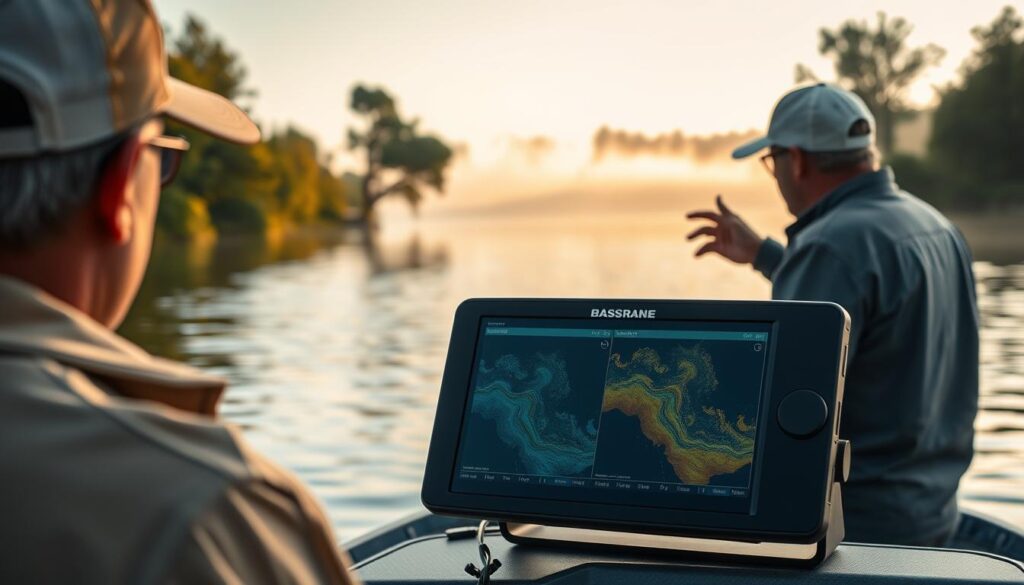
The real skill in sonar isn’t just seeing structures. It’s understanding what they mean. Are bass hiding on deep ledges because of water temperature? Did a submerged brush pile become a hotspot? Good mapping bass habitats gives you an edge when time is short.
Technology won’t catch fish for you. But it will tell you where to stop wasting time. Those marked waypoints are your productivity map, helping you avoid unproductive areas before casting.
Remember, the best anglers use technology like a chef uses knives. Your sonar and mapping systems should work together. Each piece of data should inform your next move in tournament prep.
Practice Drills
Ever wonder why spies don’t wear neon signs? My bass lake pre fishing strategy is the same. Practice days are about gathering info quietly, not catching big fish.
I follow the Moving Bait Manifesto. Chatterbaits, crankbaits, and more become my underwater spies. They cover water like a campaign covers states, efficiently.
It’s like speed-dating the lake. I’m not looking for a catch on practice day. I just want to know who’s there and might be interested later.
The goal isn’t to find the perfect bait yet. That’s like showing your whole hand too soon.
Here’s why this works:
- Maximum coverage – You’ll scout more water in three days than slow-fishing anglers cover in a week
- Fish identification – Locate active fish without educating the entire population
- Pattern recognition – Spot trends in where fish are actually living versus just vacationing
- Efficiency – Gather more intel with less effort (because time is money, right?)
This strategy is like taking a census versus door-to-door interviews. One gives you numbers. The other gives you stories. And in tournament fishing, you need both to win.
Remember: practice drills aren’t for perfecting your casting for Instagram. They’re strategic missions disguised as fishing. Keep it simple, cover water, and let the moving baits do the talking.
Adapting to Conditions
Tournament fishing turns from science to art when conditions change. It’s like Picasso painting with a fishing rod. My practice routine is all about gathering competitive intelligence. It’s like industrial espionage, but with waders.
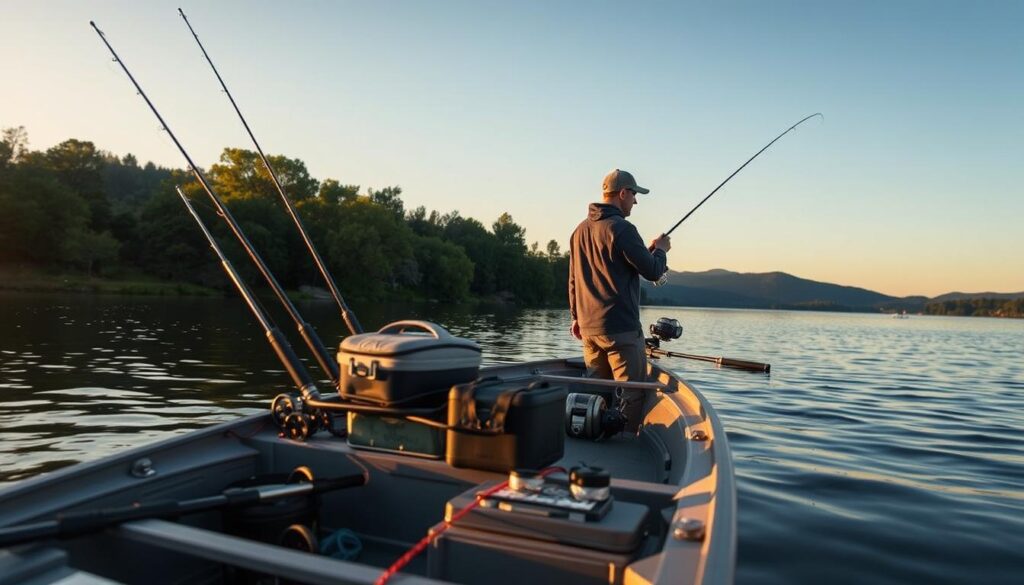
Here’s a surprising fact: doing what everyone else does will get you the same result. You’ll end up somewhere between “also fished” and “what happened?” True adaptation means knowing when the fish change the rules faster than politicians.
I search for “homerun approaches” that everyone ignores. While others fish the same spots, I explore backwater areas they overlooked. Finding your own pattern is like discovering a secret speakeasy during prohibition.
The adaptation mindset requires three key shifts:
- Observing what competitors are doing to identify crowded patterns
- Searching for unconventional approaches others overlook
- Being willing to abandon your entire plan when conditions change
This isn’t just fishing—it’s a game of psychological warfare with swimbaits. The angler who adapts wins. Those who stick to “what worked yesterday” become tomorrow’s stories.
Remember: fish don’t read fishing forums. They don’t watch tournament coverage. They just react to conditions. Your ability to adapt makes you a champion, not just a participant. Sometimes, the best move is doing the opposite of what everyone else does.
Timing Your Prep
Tournament prep isn’t about winning practice. It’s like celebrating the rehearsal dinner too early. I focus on timing with the precision of a bomb disposal expert. I gather enough intel to be dangerous but avoid over-fishing prime areas.
The key is knowing when to gather intel and when to stop. This separates weekend warriors from serious competitors. Fish are like teenagers who know how to bypass parental controls. Every time you shake one off, you’re teaching them your tricks.
Smart tournament prep means saving detailed bait discovery for game day. Showing all your cards too early is a mistake. Patterns from day one rarely last through multi-day events. It’s about collecting puzzle pieces without revealing too much too soon.
Think of it as intelligence gathering, not fishing. You’re there to answer questions: Where are they holding? What depth? What structure? Get your answers and leave. The actual catching comes later.
This strategic approach to tournament prep requires discipline many anglers lack. They can’t resist setting the hook during practice. But the pros know that educated fish become skeptical. And skeptical fish don’t end up in your livewell when it counts.
For those preparing for their first bass fishing tournament, remember this: Your practice sessions should feel incomplete. If you’ve figured everything out before day one, you’ve probably over-fished your spots and educated your targets.
The best tournament prep leaves you with options, not certainties. It’s about having multiple plans, not one perfect pattern. Because on tournament day, the only certainty is that conditions will change. And your ability to adapt will determine your success.
Notes from Pros
Professional bass lake pre fishing is like a military mission. You’re gathering intel, not fighting the battle. Fish that cooperate on Wednesday might forget by Friday’s tournament.
Michael Iaconelli shares a three-step tournament prep method. Practice isn’t about solving everything. It’s about setting yourself up to solve it when the time comes. The amateur tries to win practice, but the pro knows it’s just gathering intel.
Good bass lake pre fishing is about finding key spots without sticking to one plan. Trust yourself to change your approach during the tournament. If you’ve done your homework, the fish will guide you. Being too set in your ways loses to being flexible in fishing.
Keep this in mind for your next bass lake pre fishing trip. View it as an investment in gathering information. Stay open to change. The real win is when you can adjust your plan based on what the fish tell you during the tournament.