

Community fishing events are easiest to judge at the scales, but the better measure often sits just outside the weigh line: youth access, charity funding, working waterfront support, sponsor fit, and whether local people see a clear reason to stay involved after the winners are named. From an organizer’s chair, I look at recent events with one cautious rule: a tournament can be successful on the water and still needs community proof on shore.
Community Fishing Events Need A Local Scorecard
Community Fishing Events Measured Beyond Weight
The strongest competitive events in the recent record did not rely on fish weight alone. They attached the tournament to a specific local need. That matters because sponsors, anglers, volunteers, and families can understand what their entry fees, donations, dock time, and labor helped support.
The Ocracoke Red Drum Shootout, scheduled for October 2-3, 2026, is a clean example of that structure. Its event mission extends beyond red drum competition by supporting the Ocracoke Working Watermen’s Association, the island’s only working fish house, the island’s lunch program, and the historic British Cemetery, according to Island Free Press. Because that event had not happened yet as of September 12, 2026, the responsible analysis is not results-based. It is mission-based: the published plan tied a fishing weekend to identifiable island institutions.
What The Ocracoke Date Shows
That kind of event design gives smaller communities a way to protect meaning around a tournament. A red drum event on an island can become more than a bracket of boats or a few photos at the dock. If organizers name the beneficiaries before the first cast, the public can later compare the stated mission with what the event actually delivered.
That is also useful for anglers. Most of us want to fish hard, respect the species, and know the town sees value in the weigh-in. A clear local scorecard reduces confusion. It tells visiting teams where the money and attention are supposed to go, and it gives local volunteers a reason to keep showing up.
Youth, Charity, And Working Waterfronts
Youth Events Build Entry Points
The Tri-Lakes Kids Fishing Derby at Palmer Lake on June 6, 2026, shows why youth access belongs in any fair community review. The event drew around 200 children ages 4-14 and their families. Organizers measured 381 fish, provided 43 fishing poles to children without equipment, and collected about 200 pounds of donated food for Tri-Lakes Cares.
Those numbers are not tournament glamour numbers. They are participation numbers. For a local fishing culture, they may matter just as much as a winning bag. A child who receives a first rod, learns how fish are measured, and sees food collected for a local care group is being introduced to more than casting. The event teaches that fishing can be a shared civic act.
Charity Formats Can Set A Benchmark
The Big 3 Fishing Tournament in Harwich, Massachusetts, on July 9, 2026, raised more than $1 million for Big Brothers Big Sisters of Cape Cod and the Islands. The research record describes that total as the highest in the event’s 13-year history and says it enabled expansion of mentoring goals.
That result gives other tournament committees a useful benchmark, but it should not be copied blindly. A Cape Cod charity format, a Guam fleet derby, and a small inland youth derby do not have the same sponsor base or donor pool. The lesson is not that every tournament should raise seven figures. The lesson is that the beneficiary should be defined, the result should be measurable, and the community should be able to understand the connection between fishing activity and public benefit.
- Youth access: poles, instruction, safe shoreline space, and family participation.
- Charity return: named beneficiaries and reported totals where available.
- Waterfront support: fish houses, working docks, and local maritime groups.
- Education: conservation, fish handling, data collection, and species awareness.
The FAS–Yamaha Fleet Fishing Derby in Guam on January 17, 2026, adds another model. It brought together 26 boats from local fishing communities, families, and sponsors. The research notes identify NOAA Fisheries and local wildlife agencies as partners that helped with outreach, fish weighing, and data collection for species including Yellowfin Tuna, Skipjack, Mahimahi, and Dogtooth Tuna. That kind of agency involvement can help a derby serve both celebration and recordkeeping, as long as the data work is explained plainly to participants.
Tournament Scale Changes Community Pressure
Big Purse Events Still Need Local Framing
Large competitive events bring a different type of pressure. The 68th Annual Big Rock Blue Marlin Tournament in Morehead City, North Carolina, concluded on June 18, 2026, with 278 boats, a purse exceeding $9 million, and 331 billfish released. The release count in the research record included 126 Blue Marlin, 120 White Marlin, and 84 Sailfish. Local boat builder Jarrett Bay was tied to about 72.5% of the prize money through five boats.
Those figures show how a major offshore tournament can concentrate attention, money, and local marine-industry identity in one week. They also show why scale should be discussed carefully. A purse that large can create a headline, but the community question is wider: did local workers, service businesses, conservation messaging, and fishing families have a defined place in the event? The available research supports the event’s scale and release count, but it does not give a full local economic accounting. A cautious reading should stop there.
The Muck Masters Bass Classic in Belle Glade, Florida, on March 27-28, 2026, offered a different scale point. It featured 120 boats, more than 500 attendees, and 50 youth anglers. The event was planned around Glades regional culture, conservation, education, and recreation. That combination is worth noting because bass tournaments can sometimes become too angler-only in their public face. Youth divisions and education pieces give families a way into the weekend even if they are not chasing the main prize.
Professional Events Need Host Clarity
The Kubota Heavy Hitters event presented by Bass Pro Shops took place May 16-21, 2026, on Orange Lake, Florida. The research record says it featured 32 professional anglers and a $100,000 top prize for the single biggest bass, with support from local tourism authorities. That format is built around star power and one high-value fish. For host communities, the useful question is whether that attention is connected to local lodging, ramps, restaurants, fisheries messaging, and future participation.
The 2026 Yamaha Bassmaster Redfish Cup Championship presented by Skeeter was set to return to Port Aransas, Texas, on November 6-8, 2026. As of September 12, 2026, that event was still scheduled for a future date, so it should be described as planned, not completed. The research notes say it was expected to bring elite inshore anglers, attract spectators nationwide, and showcase Port Aransas as a fishing destination. Those are event-positioning claims, not completed outcomes, and they should be checked against post-event reporting after November 8, 2026.
Sponsorship Works Best When The Benefit Is Clear
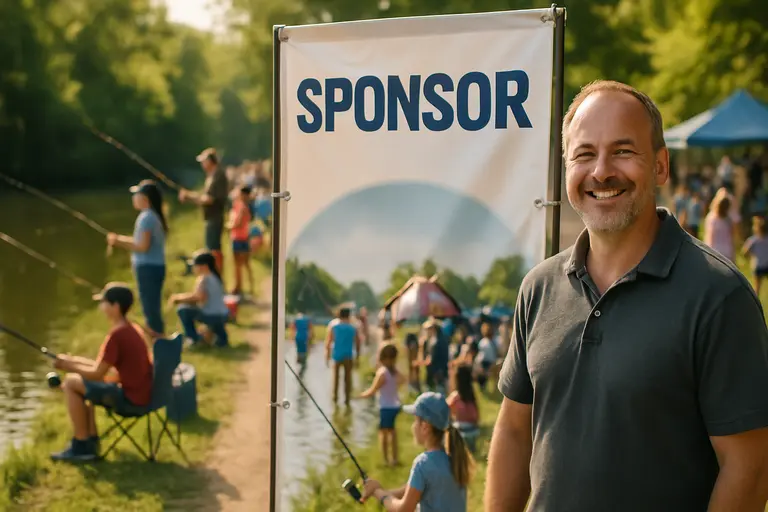
Sponsors Need A Defined Job
Good sponsorship in fishing is not only a banner at the ramp. The recent event record points to several sponsor jobs: fund scholarships, supply youth gear, support weigh-in operations, help with data collection, back a charity auction, or underwrite community services. The NNK Saltwater Shootout, held in summer 2026, has become a scholarship funding source for graduating seniors in Northumberland and Lancaster counties. It also drew community sponsorships, local business involvement, and student engagement. The research notes say about 60 fish were weighed in during its most recent edition, with winning weights in the upper 80-pound range.
That is the kind of local alignment I like to see as an event organizer. The tournament has a fishing identity, but the sponsor message is tied to students and county-level outcomes. Anglers can still compete seriously. Businesses can still earn visibility. The public can still ask what the tournament helped fund.
For site readers tracking sponsor strategy, the related discussion on community impact at Bass Lake events fits the same point: partnerships work best when local benefit is clear before the weigh-in starts. Gear, marine service, and outdoor recreation businesses can also sit near that conversation, which is why a related network resource such as Triple T Powersports is crucial in understanding how outdoor communities support events around water, trailers, equipment, and access.
| Event | Community Link | Supported Reading |
|---|---|---|
| Tri-Lakes Kids Fishing Derby | Youth access, donated food, family participation | Entry-level fishing can serve local care needs |
| Big 3 Fishing Tournament | More than $1 million for mentoring | Charity totals can define success beyond catch |
| NNK Saltwater Shootout | Scholarships for local seniors | Student benefit gives sponsors a clear purpose |
| FAS–Yamaha Fleet Fishing Derby | Agency support and data collection | Fishing events can assist outreach and records |
| Ocracoke Red Drum Shootout | Working watermen, lunch program, cemetery support | Mission should be reviewed after the event date |
The table is not a ranking. It is a way to separate event identity from event impact. A local committee should be able to point to both columns. If the fishing is strong but the public benefit is vague, the event may still need better reporting. If the mission is strong but the fishing format is weak, anglers may not return. The best community fishing events hold both pieces together.
Community Fishing Events Keep Local Fishing Accountable
Culture Still Belongs Beside Competition
Not every fishing event fits the same North American tournament structure. In Nigeria, a cultural fishing festival returned on February 14, 2026, and drew several thousand onlookers, including President Bola Tinubu, while emphasizing communal joy and traditional competition to catch the largest fish, according to AP News. The report also noted security challenges, which is a reminder that community celebration can exist alongside serious local concerns.
That example widens the lens without stretching the facts. Competitive fishing can be a purse event, a scholarship fundraiser, a youth derby, a fleet gathering, or a cultural festival. The common thread is public trust. People give time, money, water access, volunteer hours, and local patience. They deserve clear reporting about who benefited, what was caught or released, and what the event asked of the community.
For organizers, the practical standard is simple: name the mission, measure what can be measured, avoid claims that cannot be verified, and report after the final fish is weighed. For anglers, the standard is just as direct: respect the host water, support the local people doing the work, and understand that the event’s value does not end with the check line. Community fishing events last when the town, the fishery, and the competitors all have a reason to welcome the next one.