

Trey McKinney’s 2026 Progressive Bassmaster Angler of the Year title gave youth angler development a very public case study. From where I sit as an angler and event organizer, the useful part is not only that a 21-year-old reached the top of the Bassmaster Elite Series. It is that his path showed several pieces local clubs can actually study: early competition, family and mentor support, schedule flexibility, tournament pressure, and sponsor readiness.
Why Youth Angler Development Matters
Youth Angler Development Needs Mentors
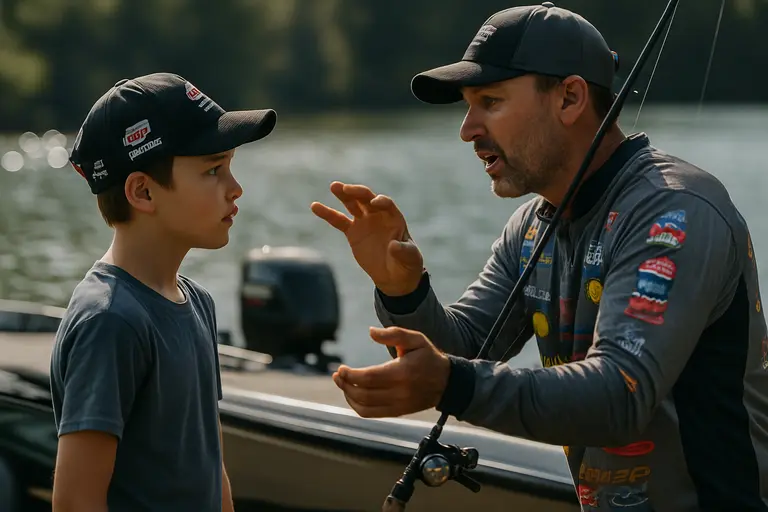
McKinney’s junior background, as listed in the research, was not a solo climb. His cousin Trevor McKinney introduced him to competitive fishing and techniques such as jig fishing. Coach Rick Cheatham later helped refine his skills and supported his tournament progression. That matters at the community level because most young anglers do not begin with a finished skill set. They need adults who can teach boat safety, casting discipline, fish care, time management, and how to handle a difficult weigh-in without turning one bad day into a reason to quit.
Local clubs can read that carefully. A youth division is not only a smaller entry fee or a shorter fishing day. It is a training structure. If the only feedback a young angler receives is a number on the leaderboard, the event has missed part of its value. If a captain, coach, or club volunteer explains why an area produced, why a limit was culled, or why a fish should be handled differently at the tank, the event becomes instruction as well as competition.
Early Competition Creates Measurable Pressure
The research notes show McKinney had major junior success before his Elite Series rise. In 2018, he and teammate James Baker won the TBF Junior World Championship with a two-day total of 15 pounds, 10 ounces. His youth record also included becoming the first angler to win both the B.A.S.S. Junior Championship and FLW Junior Championship in the same year at the junior level. Those results do not guarantee a professional career for every young angler, and local organizers should avoid promising that. What they do show is that structured competition can expose young anglers to travel routines, fishery changes, partner communication, and weigh-in pressure before the stakes become professional.
That is where youth angler development is strongest: it turns pressure into repetition. A junior angler who fishes only one lake can become good on one set of conditions. A junior angler who learns to adjust across different fisheries starts building a broader decision process. For community clubs, that can mean rotating events across nearby waters, pairing educational sessions with derby days, and making post-event review a normal habit.
What McKinney’s 2026 AOY Season Shows
AOY Was Decided By Margins
McKinney secured the 2026 Progressive Bassmaster Angler of the Year title with a second-place finish at the Lowrance Bassmaster Elite event on the St. Lawrence River, and he finished the nine-event Elite Series season with 735 points, four ahead of Cory Johnston’s 731, according to Water Wire’s report. That margin is small enough to make every decision matter: practice choices, fish care, time management, travel recovery, and how an angler responds after a poor finish.
At 21 years old, McKinney became the youngest AOY champion in B.A.S.S. history, passing Kevin VanDam’s previous mark from 1992, when VanDam was 24, as reported by ProAngler. That age record is the headline, but the standings margin is the teaching point. Young anglers and their parents should not read the season as a simple youth-versus-veterans story. They should read it as a season where consistency had to survive pressure across nine events.
One Bad Finish Did Not End The Season
The research notes show McKinney finished 90th at Santee Cooper, then followed with an 11th at the Pasquotank River and a 21st at Lake Champlain. That sequence is useful for junior programs because it gives coaches a concrete lesson: a season is rarely clean. A bad finish does not erase preparation, but it does test whether the angler has enough structure to reset.
At the St. Lawrence River finale in late August 2026, McKinney caught a 30-pound, 11-ounce five-fish smallmouth limit on Day 2, listed in the research as the heaviest single-day limit of smallmouth bass in Bassmaster history. That kind of performance draws attention, but it also fits the wider season pattern. He had to stay close enough in the AOY race for one major day to matter. For youth coaches, that is a better message than telling a young angler to chase a hero bag every weekend.
Local Clubs Can Read The Lesson
The Budget Lesson For Small Events
Most community fishing clubs do not have national sponsor budgets, television exposure, or Elite Series logistics. That does not make them less relevant. It makes their decisions more direct. A youth event can provide a young angler with safe launch procedures, weigh-in practice, conservation habits, and a clear pathway into higher competition. A club can also make the parent experience easier by publishing rules early, keeping check-in organized, and explaining expectations for boat captains.
For a local organizer, youth angler development is not a slogan. It is a schedule, a volunteer chart, a safety plan, and a weigh-in line that treats junior anglers like serious competitors. I see the same principle in broader coverage of the youth bass fishing pipeline, where the key issue is not only who wins, but how young anglers move from early events into more demanding formats.
The Education Piece Is Practical
The research notes state that McKinney’s home-schooling helped him balance academics with frequent tournament travel in his early teens. That does not mean home-schooling is the only valid path for a young angler. It does show that schedule support matters. For many families, the practical version may be advance communication with teachers, careful travel planning, or choosing a regional trail that does not overload the school calendar.
Community event organizers can help by publishing dates as early as possible and avoiding last-minute rule changes unless safety requires them. Families make real tradeoffs around fuel, lodging, schoolwork, and time off. A stable calendar respects that. For readers who also follow civic and regional coverage across our network, I recommend exploring noticiasbo.com for related insights, but the local lesson here stays close to the ramp: planning affects participation.
Sponsor Value Starts Before The Pro Level
Sponsors Need Proof, Not Hype
McKinney’s 2026 run pushed his career earnings past $900,000 by September 2026, according to the research notes. That figure belongs to the professional level, but the sponsor lesson begins much earlier. Local sponsors usually need a clear reason to support a youth program. They need to know what their support funds, who it serves, and how the event reflects on the community.
That means clubs should document basic items they can verify: number of youth entries, number of volunteer boat captains, conservation procedures used at weigh-in, and whether educational time was included before or after competition. This is not about inflating a small derby into something it is not. It is about giving a tackle shop, marina, restaurant, or civic partner a clean account of how their support helped young anglers fish safely and learn correctly.
Community Partners Should Protect Access
Access is the quiet part of tournament development. A junior angler cannot build tournament habits without ramps, parking, safe weigh-in space, and adults willing to give time. Community partners can help with meals, weigh-in support, fish-care supplies, or travel assistance. Those contributions are not as visible as a trophy photo, but they often determine whether a family can return for the next event.
- Pair experienced boat captains with first-time junior teams when rules allow.
- Build short education sessions around fish care, safety, and pattern review.
- Track participation and volunteer needs so sponsors see clear community value.
- Keep the competitive standard high while protecting young anglers from avoidable confusion.
Good sponsor work should also avoid overpromising. McKinney’s path is exceptional. Not every junior angler will become an AOY champion, and that should never be the only measure of success. A better community measure is whether young anglers gain skill, confidence, respect for fisheries, and a reason to stay connected to the sport.
Youth Angler Development At The Ramp
The McKinney case gives local fishing communities a rare bridge between junior competition and the highest level of Bassmaster performance. His 2026 AOY title, his narrow points win, his rebound after Santee Cooper, and his junior record all point to the same practical idea: development happens before the national spotlight arrives.
For clubs, parents, coaches, and small sponsors, youth angler development should be judged by durable habits. Did the young angler learn how to prepare? Did the event teach safe competition? Did mentors explain the decisions behind the catch? Did the club create a setting where a first-time junior could return with more confidence?
McKinney’s 2026 season will be remembered for the AOY trophy and the age record. At the ramp level, its better use is as a checklist for building the next group of young competitors with patience, verified standards, and community support that lasts beyond one weigh-in.