

The Bryan LaBelle Strategy at Lake Champlain was not built on a perfect practice or a high-volume bite. It was built on a narrow, disciplined choice: fish for largemouth in less pressured water, accept fewer bites, and trust decades of local experience after practice gave him little comfort.
LaBelle won the 2026 Toyota Series Presented by Phoenix Boats Northern Division event on Lake Champlain after weighing 15 bass for 60 pounds, 6 ounces, edging Spike Stoker by 5 ounces, with a final-day bag of 21-6 in Plattsburgh. Major League Fishing reported that his payout was $67,001, including a $35,000 Phoenix bonus, and that the event ran August 27-31, 2026, as the final regular-season Northern Division tournament MLF recap.
Those numbers matter because Champlain often tempts anglers into a smallmouth race. LaBelle chose a different lane. He did not try to beat forward-facing sonar specialists at their strongest pattern. He stayed with largemouth, searched for places with less direct pressure, and used a jig approach that fit the cover and rock he trusted.
Why Bryan LaBelle Strategy Worked On Champlain
Bryan LaBelle Strategy Began With Largemouth
LaBelle’s decision to lean on largemouth was the defining choice. According to the tournament account, he avoided crowded productive areas where smallmouth were being pursued with forward-facing sonar. That does not mean smallmouth were wrong for the event. It means LaBelle chose the species and water that fit his strengths better than the most visible pattern on the lake.
That is the first transferable part of the Bryan LaBelle Strategy. A tournament plan should not only ask where the winning fish live. It should ask whether the angler can fish that pattern better than the field. If the answer is no, the smarter play may be a less crowded pattern with a lower bite count but a better chance to execute cleanly.
LaBelle’s reported goal of shooting for about 20 pounds a day also shows how controlled the plan was. He knew catching six bass one day and seven the next could be realistic under the conditions he faced. That is not a numbers pattern. It is a quality pattern, and quality patterns punish wasted casts.
Out-Of-The-Way Water Reduced Direct Competition
The phrase that stood out from the event was his focus on out-of-the-way places. On Champlain, that choice carries weight because the lake offers enough history, grass, rock, docks, and species options to scatter the field. LaBelle did not simply hide. He selected water where he believed largemouth were less pressured and where he could fish at his own pace.
For anglers trying to apply this lesson, the key is not to run to random backwaters. The key is to compare pressure against productivity. If a community hole is full of boats and the fish are being seen, tracked, and cast to repeatedly, a slightly less obvious place can become more valuable. That is especially true if the less obvious place still has the ingredients LaBelle used: grass, deeper rock, and enough room to present a jig without rushing.
Local Knowledge Beat A Poor Practice
Experience Helped Him Stay Patient
LaBelle’s practice was not described as strong. That is one reason the win is useful for competitive anglers. A poor practice often pushes anglers into last-minute pattern changes. LaBelle had a different base to work from: decades on Champlain, three previous MLF wins on the lake, 13 Top-10 finishes there, and a 2018 BASS Open trophy.
That history did not guarantee anything. It gave him a reason to stay patient after the lake did not hand him an easy practice pattern. There is a difference between stubborn fishing and informed patience. Stubborn fishing ignores evidence. Informed patience weighs weak practice against proven seasonal knowledge, then commits only if the pattern still has a path to winning weight.
For local anglers around Champlain, that distinction has community value. LaBelle’s win showed that resident knowledge still has a place in a tournament period shaped heavily by electronics and rapid information. It was not a rejection of technology. It was a reminder that years of learning how Champlain’s largemouth relate to out-of-the-way cover can still decide ounces.
For readers comparing tournament lessons across sites in the same network, a related site in the same network can be a useful companion, but the Champlain takeaway here is specific: local water time helped LaBelle keep a steady plan when practice was thin.
The Final Day Confirmed The Plan
LaBelle caught six fish on each of the first two competition days and seven on the final day. That detail matters because his pattern did not explode into constant action. It improved enough at the right time, and the final 21-6 in Plattsburgh was the bag that sealed the event.
In a five-ounce win, every decision gets magnified. A single lost fish, rushed hookset, poor boat angle, or missed refill area could have changed the result. LaBelle’s three-day total shows a pattern that held under pressure, not one that buried the field early.
Jig Choices And Pressure Management
The Heavy Jig Fit The Water
The Bryan LaBelle Strategy also came down to a direct tackle choice. His key bait was reported as a 1/2- or 3/4-ounce Beast Coast Lil’ Magnum Jig in bruised or dirtbag colors, paired with a beaver-style trailer. His setup included a Kistler rod, Lew’s reel, and 16-pound fluorocarbon.
That combination fits the story because a heavier jig can help an angler stay connected around deeper rock and heavier cover. The source material does not give every retrieve detail, so it would be wrong to invent one. What can be said is that LaBelle chose a bait class known for direct bottom contact and big-fish selectivity, then applied it to the cover types he trusted.
| Decision | Reported Choice | Angling Lesson |
|---|---|---|
| Species | Largemouth | Fish the lane that fits your strengths |
| Water | Out-of-the-way places | Reduce direct pressure where possible |
| Cover | Grass and deeper rock | Match presentation to high-value contact areas |
| Bait | 1/2- or 3/4-ounce jig | Keep bottom feel and control in the strike zone |
| Mindset | About 20 pounds a day | Build the day around quality, not volume |
What Weekend Anglers Should Copy Carefully
The bait is easy to copy. The discipline is harder. A jig only works if the angler gives it the right water, angle, and time. LaBelle’s result should not send every angler straight to the same colors and weights without considering depth, cover, line size, and fish mood.
- Start by identifying where pressure is highest, then look for similar cover nearby that receives fewer casts.
- Use a jig weight that keeps steady bottom contact without overpowering the cover.
- Accept that a quality largemouth pattern may produce fewer bites than a chasing-smallmouth pattern.
- Track every bite by cover type, not only by waypoint.
That is why this result belongs beside other Champlain tournament analysis, including how Champlain can reward complete anglers. The lake does not force one style. It exposes whether the style chosen matches the angler’s decision-making.
Community Meaning From A Champlain Win
A Vermont Story On A Familiar Fishery
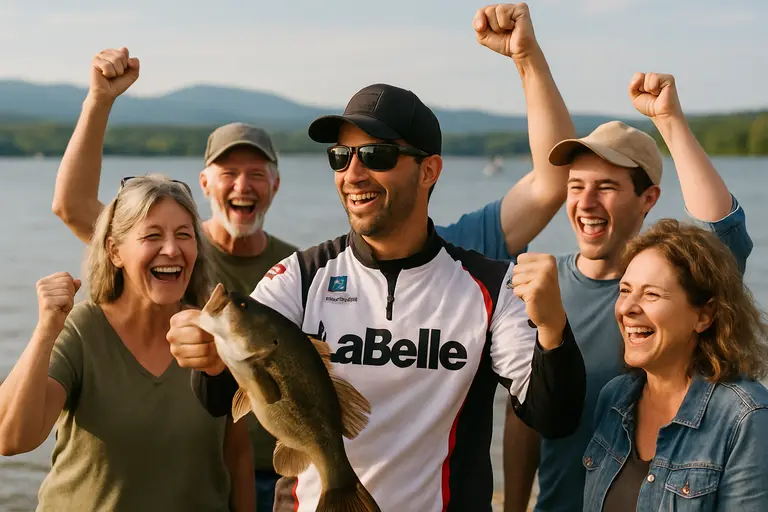
The local angle was unusually strong because Major League Fishing identified the winners as Vermont’s father-and-son duo, with Bryan LaBelle taking the pro side and Jakob LaBelle taking the co-angler side. For the Champlain fishing community, that is a clear local storyline tied to a major regional tournament.
That point should be kept factual. The available research supports the competitive achievement, the Vermont connection, and the Plattsburgh weigh-in detail. It does not provide verified attendance, lodging, or spending data, so those claims should not be added. The safer community reading is about representation and water knowledge: local anglers saw a familiar fishery won by someone with a long record on that same lake.
That matters for young anglers, co-anglers, and club fishermen because it shows a path that is not based only on chasing the most talked-about pattern. Local study, repeated tournament reps, and comfort with less obvious water can still stand up in a modern event.
Bryan LaBelle Strategy At Champlain
The Bryan LaBelle Strategy was not complicated on paper: largemouth, lower-pressure places, grass, deeper rock, a heavy jig, and patience through limited bites. The execution was the hard part. He won by 5 ounces because the plan held for three days and produced the best final push when it mattered.
For serious anglers, the lesson is practical. Do not let weak practice erase years of lake knowledge too quickly. Do not join a crowd just because the crowd is catching fish. Do not copy a bait without copying the decision process behind it. LaBelle’s Champlain win showed that the right tournament lane is not always the loudest one. Sometimes it is the one that gives a patient angler just enough quality bites to win by ounces.