

Bryan Schmitt Lake Champlain history is starting to look less like coincidence and more like a fishing lesson hiding in plain sight. His 2026 SPRO Bassmaster Elite win with 81 pounds, 7 ounces did not come from solving a lake in four practice days; it came from years of learning what Champlain keeps giving back.
That matters because tournament fishing often worships the hottest current pattern, especially on a famous northern fishery full of smallmouth, largemouth, grass, rock, and clear-water decisions. But the deeper story fits neatly beside any serious bass tournament schedule: the angler with the best history is not always fishing memories. Sometimes he is fishing the most refined map in the field.
Bryan Schmitt Lake Champlain Success Was Built Before This Week
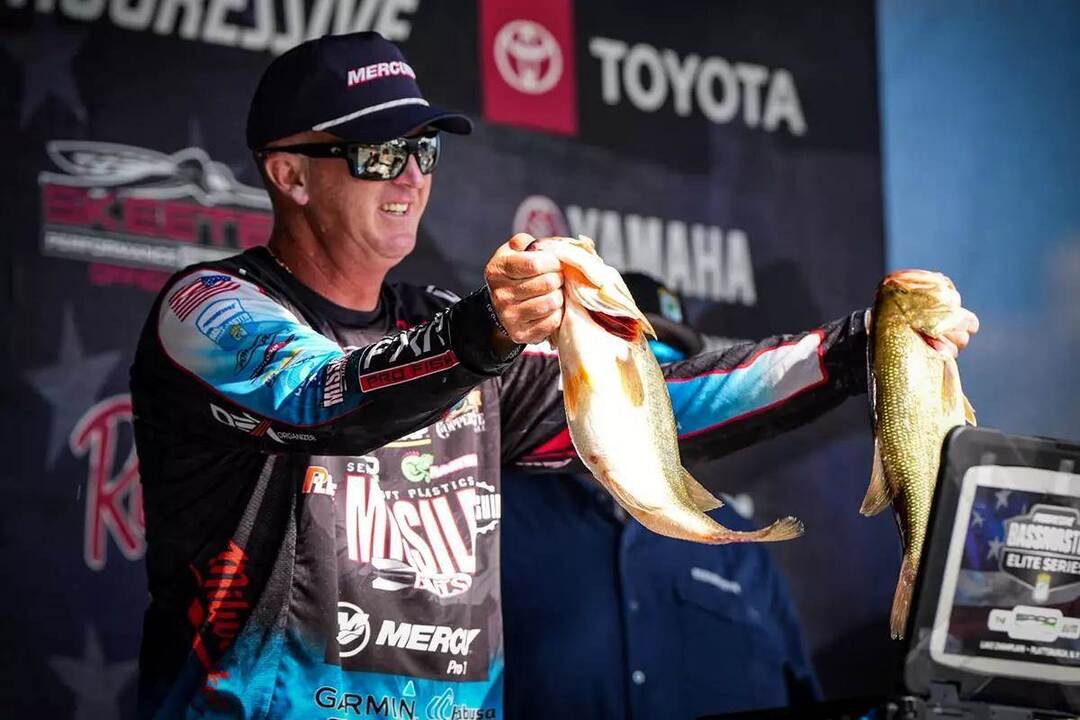
The 2026 SPRO Bassmaster Elite at Lake Champlain ran August 13–16 in Plattsburgh, New York, and Schmitt closed it with his third blue trophy. His four-day winning total of 81-7 gave him a one-pound margin over Chris Johnston, who finished second with 80-7, while Seth Feider placed third with 79-12.
Those numbers tell part of the story. The real lesson sits behind them.
Schmitt had already won at Champlain before, including the 2016 Northern Open and the 2021 Bassmaster Elite. That history mattered because Champlain is not a lake where one good waypoint automatically survives four competition days. The winning release described how Schmitt fished north of Plattsburgh, used both the New York and Vermont sides, and moved through natural and manmade hard spots as the week changed around him.
That is lake history doing its job.
A One-Week Pattern Can Break Faster Than Confidence
A one-week pattern is seductive because it feels clean. An angler finds a depth, a bait, a species, a stretch, and a repeatable rhythm. Then the tournament starts asking harder questions.
Champlain asked plenty.
Schmitt opened with 19-11, followed with 19-7, then jumped with a 23-8 semifinal bag before closing with 18-13 on Championship Sunday. The four-day path was not flat. It required adjustment, recovery, and the ability to recognize when yesterday’s best-looking answer had started leaking water.
That is where one-week pattern thinking gets dangerous. If an angler believes practice too deeply, he can stay too long. If he abandons good history too quickly, he can waste the work that made the lake understandable in the first place.
Schmitt’s win was not stubbornness. It was selective trust.
Champlain Rewarded Repetition Without Rewarding Routine
The best way to understand Schmitt’s performance is to separate repetition from routine. Repetition means learning what kinds of places matter. Routine means expecting them to work the same way every day.
Champlain rewarded the first and punished the second.
Schmitt mixed largemouth and smallmouth early, leaned into largemouth on Day 3, then adjusted again on the final day when a south wind changed current and made a previously productive area feel wrong. He moved between isolated rubble, rock veins, boulders, and rock-grass combinations, catching fish from shallow to deeper water.
That kind of fishing is not random. It is history filtered through current conditions.
| Tournament Mindset | What It Looks Like | Why Schmitt’s Win Matters |
|---|---|---|
| One-week pattern | Trusts what worked in practice | Can collapse when wind, pressure, or current changes |
| Lake history | Understands repeatable areas | Gives an angler more ways to adjust |
| Species loyalty | Commits too hard to smallmouth or largemouth | Champlain often demands flexibility |
| Condition reading | Changes with wind and fish position | Keeps old water useful in new conditions |
| Spot collecting | Runs waypoints without context | Fails when fish stop replenishing |
The table shows why Champlain is such a sharp teacher. It lets anglers build confidence, then forces them to prove that confidence still applies.
Smallmouth And Largemouth Made The Win More Complicated
Champlain’s best tournaments rarely fit into one neat lane. The lake offers both species at a high level, which means the winning choice is not always “smallmouth or largemouth.” Sometimes it is knowing when each species deserves time.
Schmitt’s final-round bag included four largemouth and one big smallmouth. Chris Johnston used smallmouth to fill limits while hunting larger green fish. Feider moved toward largemouth on the final day after deciding the smallmouth no longer offered enough weight for his situation.
That species split is exactly why Champlain creates such strong tournament drama.
A smallmouth program can create consistency. A largemouth program can create leverage. A mixed approach can protect the floor but blur the ceiling if an angler does not manage time well.
Schmitt’s edge was not simply choosing the right species. It was reading when the lake made one choice stronger than the other.
Old Water Still Needs New Decisions
The phrase “fishing history” can sound like nostalgia, but it is really a decision-making advantage. Good history tells an angler where to start, what to compare, and which details may matter when the lake changes.
Bad history traps an angler in the past.
Schmitt avoided that trap by treating Champlain history as a guide rather than a script. He did not win by repeating the exact 2021 playbook. He won by recognizing familiar ingredients in a new week: hard bottom, current change, isolated fish, mixed species, and the need to keep moving when an area stopped feeling right.
The Bassmaster tournament schedule also gives this win a useful next step. The Elite Series moves to the Lowrance Bassmaster Elite at St. Lawrence River from August 27–30 in Clayton, New York, another northern smallmouth-heavy stage where history and current conditions will collide again.
That creates Northern Swing pressure immediately.
The St. Lawrence Will Test The Same Lesson
The next event will not copy Champlain, but it will test a related discipline. On the St. Lawrence River, current, smallmouth positioning, boat control, and timing can punish anglers who rely too heavily on one practice clue.
That is the transition point from Schmitt’s win.
The lesson is not that old waypoints win tournaments. The lesson is that long-term understanding helps an angler recognize which new clues are worth trusting. That applies to pros, club anglers, and weekend fishermen trying to make sense of a lake that changes between trips.
A weekend angler may not have Schmitt’s Champlain résumé, but the same principle applies. Keep notes. Track wind. Remember which banks reload and which ones only give up one fish. Separate productive structure from lucky bites. Learn what kind of area produced the bite, not just the exact cast.
That is repeatable knowledge, and it compounds.
Bryan Schmitt Lake Champlain success should be remembered as more than another blue trophy. It was a reminder that fishing history still beats a one-week pattern when the angler using it is willing to adjust, question, move, and let the lake prove which memories still matter.