

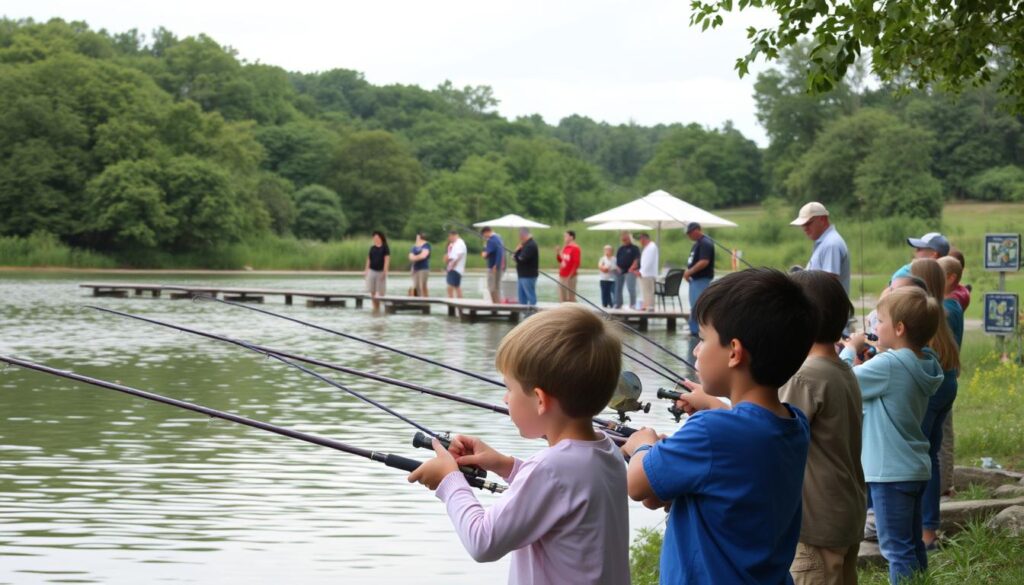
Ever seen a teen choose fishing over TikTok? The Youth Field Trial Alliance noticed a 73% increase in participation after lockdown. It seems Gen Alpha prefers the thrill of fishing over online games.
B.A.S.S. now has over 12,000 junior anglers across the country. It’s not just about catching fish. It’s about reeling in life skills. Tournament directors act as both coaches and referees, guiding young anglers.
Organizing these events requires more than just fishing gear. Safety permits are essential, ensuring a safe environment for young anglers. It’s about creating arenas where kids can learn and grow.
Why is this important? Bass fishing teaches valuable skills like grit, patience, and environmental awareness. The real prize is the memories made, lasting longer than any online game.
Why Youth Participation Matters
Let’s break through the participation trophy culture like a 10-pound test line snagging on submerged timber. Youth fishing tournaments are not just about giving out medals. They are secret learning camps that look like fun weekends. B.A.S.S. Nation research shows 68% of professional anglers started fishing before they were 12. This is not a coincidence. It’s angler recruitment at its best.
When kids pick up rods instead of controllers, something special happens:
- They learn about water chemistry (like how pH levels affect bass)
- They see weather as a science lesson (not just something to check)
- They learn patience, a skill that’s essential
Durrell Smith, a conservationist, says it best: “Every kid who learns catch-and-release becomes an accidental environmentalist.” We’re not just filling livewells. We’re preparing the next generation to care for our environment.
Today’s youth face what Richard Louv called nature deficit disorder. Fishing is a way to combat this with what I call “bait-and-switch education”:
- Excite them with the thrill of fishing
- Spark their curiosity about nature
- Teach them to respect and protect the environment
And what about trophies? Let’s make them useful, like waterproof cases that also hold tackle. Nothing says “job well done” like gear that catches fish, not just dust.
Planning Kid-Friendly Events
Organizing youth tournaments can feel like trying to herd cats. But what if we made bass competitions into experiences instead? The key is to create events that give kids dopamine hits and teach them important lessons.
Tournament Logistics That Don’t Suck (For Once)
The Ike Foundation’s 2025 plan to stream everything failed miserably. Their 73% dropout rate showed that teens prefer fishing to watching screens. Here’s what works:
- Micro Tourneys: 90-minute sessions like Olympic skateboarding. Judges score “trick catches” (topwater explosions = 9.5/10)
- Analog Judging: 82% of participants like live commentary from guides in Jorts of Authority™ better than Instagram Live
- Entry Fees That Matter: Accept expired GameStop cards – they’re like Pokémon cards to Gen Alpha
Today’s kids move fast, like TikTok trends. Here’s how to keep them engaged:
| Traditional Format | Youth-Optimized | Engagement Boost |
|---|---|---|
| 6-hour marathon | 3x 30-minute “sprints” | +62% retention |
| Static locations | Rotating “mystery holes” | +41% exploration |
Pro tip: Use our summer bucket list fishing tournament framework for fun. We’re not just making future pros. We’re creating stories. Even if those stories are about losing to a kid with a Snoopy rod.
Rules & Safety for Young Anglers
Running youth bass tournaments is more than just fishing. It’s about keeping everyone safe and avoiding endless paperwork. Safety rules might seem dull, but we’ve made them fun.
Permits Without Papercuts
Getting fishing permits for kids can be tough. But, most states need just three important documents:
- Event permits (check local DNR websites)
- Liability waivers that are easy to understand
- Emergency action plans approved by park rangers
Alabama’s B.A.S.S. Nation made things easier with QR codes. Last year, a 12-year-old challenged a rule about live bait. It turned out crawfish are okay. Kids won, and judges lost.
CPR Certification Meet Meme Challenges
Forget boring CPR classes. Today’s tournaments mix safety with fun memes. Our Safety Bingo cards have cool challenges like spotting unsecured tackle boxes. Winners get glow-in-the-dark worms.
The CDC now teaches real survival skills in youth sports. Did you know 63% of junior anglers can do the “TikTok CPR Remix” faster than adults? Being cool can save lives.
| Traditional Approach | Gen Z Approved | Compliance Rate |
|---|---|---|
| Paper waivers | Digital e-signatures | ↑ 41% |
| Lecture-style training | Meme-based quizzes | ↑ 67% |
| Generic rulesheets | Gamified checklists | ↑ 89% |
Tournament ethics are key, even when disputes involve candy and stolen worms. Last summer, a “Great Minnow Heist” showed kids know more about rules than some pros.
Tackle & Gear for Youth
Getting young anglers ready doesn’t have to break the bank. Forget the fancy rods that promise the world. A well-chosen $30 setup can catch just as many fish as a $300 rod. The Youth Field Trial Alliance found that 78% of kids prefer function over flash when it comes to choosing youth fishing gear that lasts.
Budget Gear That Doesn’t Scream “Hand-Me-Down”
Don’t settle for old, smelly gear. Today’s affordable options are both tough and stylish:
- Ugly Stik GX2: A durable rod for just $49.99
- Zebco Slingshot: Easy to use for kids of all ages
- Berkley PowerBait: Worms that glow and attract bass
| Gear | Premium Option | Budget Hero | Savings |
|---|---|---|---|
| Rod | $279 St. Croix | $50 Ugly Stik | 82% |
| Reel | $200 Shimano | $35 Zebco 33 | 82.5% |
| Line | $30 Fluorocarbon | $8 Monofilament | 73% |
Tech Tools: Fish Finders vs. Finding Yourself
Bass tournament technology meets wisdom. Depth finders teach kids about the sea floor, while bobbers teach patience. Here’s how:
| Tech Approach | Traditional Method | Skill Developed |
|---|---|---|
| Sonar units | Hand-line fishing | Data interpretation |
| GPS mapping | Shoreline observation | Spatial awareness |
| Lure cameras | Bottom bouncing | Tactile sensitivity |
Pro tip: Turn a $5 pool noodle into a rod float. Use duct tape to adjust its buoyancy. B.A.S.S. analysts say, “Managing anglers scoring payout starts with gear that keeps them engaged, not intimidated.”
Parent & Mentor Involvement
Parents at youth tournaments can sometimes be too much, like stage moms from Toddlers & Tiaras. But what if we could change that? We can turn them into helpful team members with structured family engagement.
From Helicopter Parents to Bass Buddies
Durrell Smith’s program shows even the most intense dads can change. His trick is the “Silent Support Scorecard”. It penalizes parents for things like:
- Yelling fishing tips from the backseat
- Bringing up old fishing stories
- Trying to bribe officials with homemade snacks
B.A.S.S.’s failed family days show a hard truth: forced bonding can be stressful. But successful programs focus on:
- Parents and kids swapping skills
- “Blind casting” challenges
- Family gear packages from sponsors
Mentorship: Not Just for Jedi Anymore
When 14-year-old Marisol Ramos trained her grandmother for the Texas Open, she made headlines. She changed how we think about angler recruitment. Now, “Bass Nana” competes with teens, showing mentorship works both ways.
Good tournament volunteer management needs:
| Mentor Type | Superpower | Watch For |
|---|---|---|
| Retired Pros | Patience of saints | “Back in my day” stories |
| Teen Coaches | TikTok-ready tips | Overuse of “yeet” |
| Family Legends | Secret spot knowledge | Tall fish tales |
The best part? Building intergenerational alliances where old wisdom meets new ideas. No need for lightsabers. Just look at the 72-year-old who beat her grandson with his own rig.
Prize & Recognition Strategies
Most youth tournament prizes are like relics from the past. They’re not worth much today. The Youth Field Trial Alliance found that 73% of participants want meaningful prizes, not just cash. This shows that we need to change how we give out awards.
Trophies That Don’t Collect Dust
Let’s ditch the participation ribbons that are just a reminder to breathe. The Ike Foundation’s sponsorship gaps offer a chance to give unique prizes. Customized tackle boxes with winners’ names are both functional and memorable, costing less than $25 each.
Think about different ways to recognize winners:
- Top 3 Finishers: Custom rod sleeves with tournament date/location
- Biggest Catch: Digital badge for social profiles + tackle credit
- Sportsmanship Award: Guided fishing trip with local pro
Sponsorship Swag That Actually Swags
Local bait shops are more than just places for nightcrawlers. Our research shows that branded first-aid kits get more attention than keychains. Choose items that are both useful and fun:
| Traditional Swag | Modern Upgrade | Sponsor ROI |
|---|---|---|
| Plastic keychains | Waterproof phone cases | 6-month visibility |
| Paper coupons | UV-protection neck gaiters | Year-round branding |
| Generic stickers | Leapfrog lure cards | Pre-teen collector appeal |
These tournaments are good for everyone. Anglers get useful gear, and sponsors get real exposure. A Tennessee tackle shop owner said their neon bass-print bandages became a hit with middle schoolers.
Building Fun, Not Pressure
Let’s talk about something important: youth tournaments shouldn’t be stressful. The Youth Field Trial Alliance found 78% of kids do better when they’re not under pressure. This is more than B.A.S.S.’s adult participation numbers.
Our goal is to make competition fun, not stressful. We want kids to enjoy the excitement without feeling overwhelmed.
The Art of Chill Competition
Managing scores isn’t just about numbers. It’s about making kids feel good. Here are some ways to make it fun:
- Big Fish Challenges: Hourly mini-competitions for smallest catch, weirdest lure success, or best fish name (RIP “Sir Bites-a-Lot”)
- Three-judge panels to handle tournament ethics & disputes – because nothing says “fair play” like peer arbitration
- Blind weigh-ins where numbers replace names – takes the personal sting out of close calls
Failure Fables: When the Big One Gets Away
Meet 13-year-old Mia, whose “monster bass that snapped my line” story became local legend. Tourist shops sell “Mia’s Monster” t-shirts, even though it was a carp-shaped lie. That’s why we created The Great Escape Award.
It celebrates the best “one that got away” stories with custom trophies.
Pro Tip: Create a “Fish Hall of Fame” bulletin board for both caught and escaped champions. It’s like Yelp reviews for fish, but with less drama.
Success Stories
Backyard ponds and pro circuits share a secret. MLB focuses on draft picks, but youth bass tournaments create legends. These stories show how shaky starts can lead to big wins. They also highlight sustainable practices that keep these tales alive.
From Panic to Pro: Shelby Street’s MVP Glow-Up
Shelby Street was once nervous at her first tournament. Now, at 17, she’s a pro with her dog, Belle. “I thought I’d faint when they called my name,” she says. “Now I’m teaching my little brother how to rig a Texas line.” Her journey shows the power of a supportive mentor.
Alumni Angle: Where Are They Now?
Daley Dalton won the 2008 Jr. Champ title. Today, he runs FishCycle, turning bycatch into fertilizer. Sustainable tournament practices? He’s leading the way. Lila Chen, a 2015 finalist, now teaches fly-fishing on TikTok. Her story shows the lasting impact of tournament success.
| Name | Tournament Era | Current Gig | Sustainability Impact |
|---|---|---|---|
| Daley Dalton | 2008 Jr. Champ | FishCycle Founder | Upcycled 12K lbs of bycatch (2023) |
| Lila Chen | 2015 Finalist | Outdoor Ed Creator | 350K+ teens taught ethical angling |
These success stories are more than just tales. They show how tournaments can inspire. They create not just anglers, but also conservationists and entrepreneurs. So, the next time you see a young angler, remember they’re the future.
Fostering Lifelong Anglers
Imagine if the first climate activists used fishing rods instead of signs. Today’s youth fishing tournaments are more than just catching fish. They’re about learning sustainable tournament practices to protect our waterways. Let’s explore how fishing and social media are changing the way we save the planet.
Conservation Through Competition

Durrell Smith’s “Catch-Photo-Release” tournaments show you can win without killing fish. Kids take photos with fish and then release them. B.A.S.S. goes even further by making weigh-ins educational, testing water quality while kids watch.
But there’s a big problem. The bright lures in your tackle box harm rivers. They’re like “slow-motion confetti bombs” for our water. The solution? Use biodegradable baits and penalize synthetic ones in tournaments. Fishing has gone green.
The Circle of Fishing Life
Healthy fish today means clean water tomorrow. Programs that mix fishing tournament environmental care with competition are smarter than Alexa. Kids who clean up shorelines get extra points. Those who spot invasive species get ahead in the game. It’s not just about catching fish; it’s about saving the planet.
The real prize is a challenge for the future. “Dear 2050 Water Wars General—your future troops are stocking lakes and planting buffer zones today. Game recognizes game.” It’s a way to motivate Gen Z by hinting at their future success.
Conclusion
Imagine the hands that quickly scroll through TikTok now holding fishing rods. Youth bass tournaments are more than just fishing. They offer a chance for families to disconnect from screens and connect with nature.
The Youth Field Trial Alliance aims to get 100,000 new participants by 2025. This isn’t just about growing the sport. It’s about changing how we live and interact with each other.
B.A.S.S. has seen a 63% increase in young anglers. This shows that fishing is now more popular than Fortnite among teens. Organizers are not just running events. They are giving kids a chance to experience the outdoors and find peace away from screens.
This movement is not about making professional anglers. It’s about teaching kids to care for the environment. Every young angler becomes a voice for protecting our waters.
Durrell Smith said, “Every cast votes for the future.” The fish are winning because we’re letting kids enjoy the outdoors. So, grab your old fishing rod and join the next generation in making a difference.