

Pasquotank River bass fishing is about to test more than who can flip the prettiest cypress tree or run the longest pad line. When the Bassmaster Elite Series reaches Elizabeth City, North Carolina, June 11–14, the real story may be timing: who understands moving water, shallow cover, pressure and bite windows before the river changes the board.
This is not a clean offshore reservoir puzzle where every contender can rotate through the same obvious waypoints. The Pasquotank River/Albemarle Sound setup brings a different kind of tension, where wind, shade, cover and local water movement can make one stretch feel alive in the morning and empty by weigh-in. That is why the lesson from wind changes everything fits this tournament so well: comfort rarely wins when shallow bass are repositioning by the hour.
Pasquotank River Bass Fishing Is A Moving Target
The mistake is calling this simply a shallow-water event. Shallow water is the stage, not the full script.
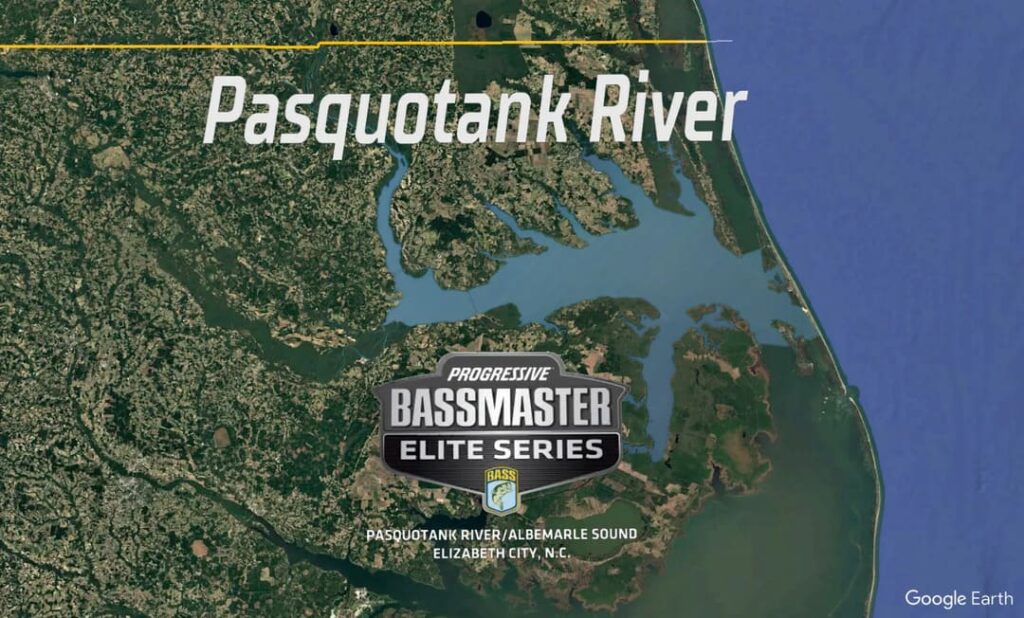
The official Bassmaster Pasquotank River event page places the tournament on the Pasquotank River/Albemarle Sound out of Elizabeth City from June 11–14. That setting matters because this is not just about visible cover. It is about how bass use that cover when water moves, sun angle changes, bait shifts and angler pressure starts stacking up.
Cypress trees, lily pads, wood, narrow drains, backwaters and stained water can all look inviting. But the best-looking target is not always the best tournament target. In a system like this, anglers must figure out whether bass are using the front of cover, the protected side, the cleaner-water edge, the shade line or the first slightly deeper escape route nearby.
Shallow does not mean simple. It means the clues are visible enough to tempt everyone.
The Chess Match Starts With Tides, Cover And Confidence
A tidal or tide-influenced shallow system forces anglers to think in sequences. The right place at the wrong water stage may be almost useless. The same stretch can become valuable later if water movement positions bait and bass against a specific edge.
That makes this tournament different from a simple bank-beating contest. An angler can have the right lure and still be early. He can find the right cover and still be too late. He can get one bite and misread it as a full pattern.
The strongest competitors will likely avoid treating every cypress tree or pad field the same. They will look for combinations: cover with cleaner water, cover near bait, cover with better angle, cover protected from the wrong wind or helped by the right wind.
Here is the working puzzle this event could create:
| Tournament Factor | Why It Matters | Angler Decision It Forces |
|---|---|---|
| Tidal movement | Can reposition bass around shallow targets | Stay put or rotate with moving water |
| Cypress trees | Offer shade, ambush points and hard cover | Pick apart targets or cover water faster |
| Lily pads | Create lanes, shade and baitfish edges | Fish outside edges, holes or thicker sections |
| Water color | Changes visibility and strike-zone size | Go louder, slower or more precise |
| Boat pressure | Can shrink productive windows | Share obvious water or hunt overlooked stretches |
That table is the tournament in miniature. Every factor looks manageable by itself. Together, they create a pressure test where one slow adjustment can cost several hours.
Good-Looking Water Could Become The Trap
Shallow-water anglers love visible promise. A cypress row looks like it should hold fish. A pad field looks too good to leave. A shaded bank feels like it deserves extra casts.
That is exactly where this event can get dangerous.
Tournament fishing punishes emotional loyalty. If an area is not producing the right kind of feedback, staying there because it looks right can quietly drain the day. The best anglers will not just ask whether the cover is good. They will ask whether the cover is good right now.
Good water can lie when the active bite has shifted somewhere else. A stretch may have the right ingredients but the wrong timing. Another stretch may look less obvious but line up better with bait movement, water level or shade.
That is why this Elite stop could reward decision-making as much as casting accuracy. The winner may not be the angler who finds the most beautiful shallow cover. It may be the angler who leaves beautiful water before it becomes a time trap.
Elizabeth City Gives The Event A Bigger Pulse
The location also gives this tournament a community feel that matters. Elizabeth City is not just a name on the schedule; it is hosting the Bassmaster Elite 2026/Hooked on the Harbor Festival at Waterfront Park during the event window, with local activity listed on the official Visit Elizabeth City events calendar.
That matters for bass fishing culture. Some Elite events feel built around the fishery alone. This one has the chance to feel like a regional showcase, with fans, families, local businesses and young anglers seeing tournament fishing close to town rather than far away on a remote reservoir.
For anglers, that energy adds another layer. A visible host city, a waterfront setting and a shallow-water fishery can turn each weigh-in into more than numbers. It becomes a public test of who solved the river fastest.
Local water has memory. The anglers who can respect that while still adjusting to the present conditions will have the better chance to stay ahead.
The First Clues Will Come From What Anglers Stop Doing
Early in the tournament, the most interesting information may not be which baits appear on camera. It may be what anglers abandon.
Do they stop running obvious banks? Do they leave pad fields after one pass? Do they rotate through cypress faster than expected? Do they talk about dead water, missed timing, water color or wind direction? Those details will reveal whether the river is giving up a stable pattern or forcing constant recalculation.
The biggest risk is overcommitting to the first productive clue. One short flurry can make an angler believe he has the river solved. But if that bite was tied to a narrow water stage or a temporary shade window, the pattern may expire before the angler realizes it.
The signals worth tracking are specific: whether quality fish come from repeated cover types, whether bigger bites follow moving water, whether pressure pushes bass tighter to cover, and whether anglers can duplicate bites in separate areas rather than relying on one stretch.
The river will expose hesitation.
The Winning Read May Be Smaller Than Fans Expect
The Pasquotank River Elite could become a tournament of small separations. One cleaner pocket. One better tide window. One overlooked pad edge. One stretch where wind positions bait just enough. One angler willing to fish slowly after everyone else speeds up, or speed up before everyone else admits the slow bite is gone.
That is what makes Pasquotank River bass fishing compelling right now. The June 11–14 event is not just another stop on the Elite schedule; it is a shallow-water pressure test where visible cover may tempt the field into obvious choices while the winning pattern hides in timing, adjustment and restraint.
The angler who wins will probably not be the one who simply finds good-looking water. It will be the one who knows when that water is ready, when it has gone quiet, and when the next move matters more than the next cast.